Examples of Violence
When does violence occur? Warfare is the easiest and, one could say, the most natural context: it is founded on violence involving people, things and the landscape in general. Violence is an intrinsic procedure of war, and without it there is no war.
The large majority of pictures and representations of violence in both Mesopotamia and Syria is strictly related to representations of wars and battles where the bodies of enemies are explicitly targeted by violent actions. The wide dissemination of these representations and the analysis of violence as a direct consequence of war minimises and is detrimental to the study and comprehension of other forms of violence, which are less spectacular than aggression in war and even in ancient times did not receive the same degree of attention and dissemination in the visual media.[1179]1 think, therefore, that the equation of violence with war is misleading. At the same time, however, war-related violence attracted the attention of ancient Mesopotamians and Syrians, and, as a consequence, has caught the attention of modern scholars. Although other forms of violence existed in ancient Mesopotamia and Syria that could in fact be connected to, for example, religious themes,[1180] violence in warfare has prevailed and still does. To a certain extent, we can speak of a spectacularisation of violence with the proliferation of representations and pictures purposely created to satisfy a voyeuristic craving for the bodily pain suffered by others.[1181] It seems that violence in the religious domain is accepted and indeed necessary for the transformation and creation of a new condition.[1182] In the Mesopotamian Epic of the Creation and the poem Atrahasis, the creation of both the world and human beings is the result of the sacred killing (the sacrifice) of an antagonist, Tiamat (the creation of the world), and of Aw-ilu/Qingu (the creation of humankind).[1183]Not only is the finality of violence different in this case; the executor of the violent act also belongs to different domains.
Usually, gods are allowed to perform a sacred killing and, even when involved in fights and warlike actions, the killing caused by gods operates within a cosmic plan while the killing and violence caused by human beings in war has a more utilitarian aim that is the physical elimination of the enemy. If the enemies of the gods are eliminated to become part of a new project, enemies of human beings are simply killed because they are a thorny presence that prevents the ruler from accomplishing his plans of conquest and expansion of control and power over other territories and their wealth. At the same time, because the wars they fight and the enemies they kill are different from those faced by the gods, rulers want to present their violent actions in reference to the myths, actually paraphrasing the same poetic language that is translated and adapted to the description and representation of the human fight. Kings are said to use the same weapons as the gods to defeat their enemies and representations replicate this similarity. If on the Stele of the Vultures of King Eannatum (Early Dynastic period, second half of the third millennium bce) the god Ningirsu holds a net containing the enemies, it is King Sargon of Akkad (in the following Akkadian period) who holds the net of enemies in front of the seated goddess Ishtar on stele Sb2 (Figures 31.1 and 31.2).[1184] The king is not only the champion of the fight but also the one who celebrates the victory and the outcome of the battle. In this respect, kings use the same weapon and are represented in the same attitude and position as the gods. Can we infer that the actions of the gods inspired those of men, giving wars a rituality that we can retrace in ritual texts and oracles that were played and declaimed before battle?[1185]Representations of violence in the arena of war principally focus on the explicitly excessive abuse of violence, showing the cruelty of actions against the bodies of enemies, who are beheaded, impaled, flayed and tortured.
Violence is directed at both living and dead enemies, and these different types of violence can be singled out in the representations. Within the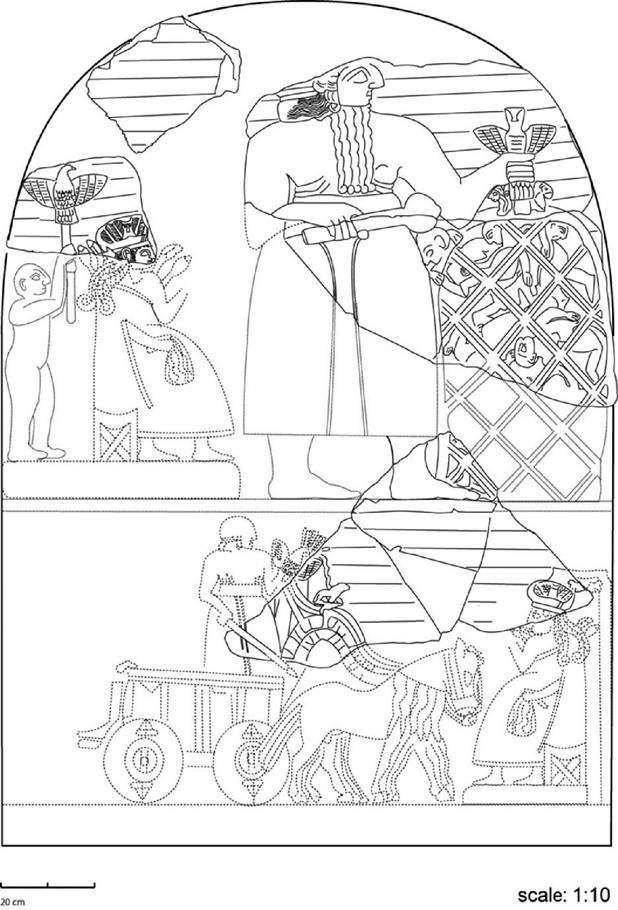
Figure 31.i Stele of the Vultures of Eannatum (side 2).
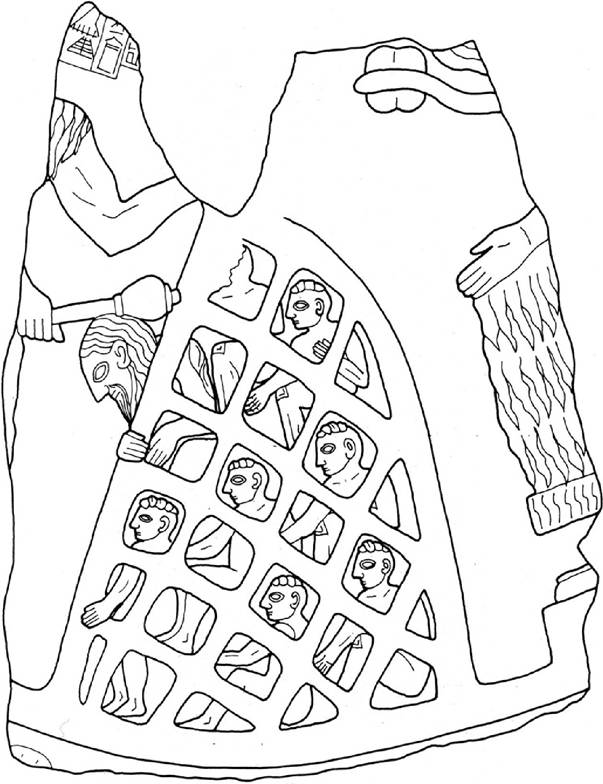
Figure 31.2 Stele Sb2 of Sargon of Akkad.
framework of what I call the spectacularisation of violence, the rage directed against even the corpses of enemies points to the meaning and value of violence as a deliberate cultural and political choice. As a consequence, the representations crystallise the moment, on the one hand, and also contribute to the narrative of violence in all phases of the battle, on the other. In particular, when violence is not simply presented (as an icon) but represented (it is settled as part of a narrative plot), it is the result of a cultural process that aims at explaining the mechanism of the violence in all its components, pointing to a real involvement and reaction from observers. A single icon of violence represents an a-spatial and a-temporal act of aggression that is therefore fixed in a kind of recurrent figurative topos, unrelated to a precise context. A narrative of violence is the result of a construction that aims at telling and fixing a story that can be handed down. Indeed, the icon is sometimes the result of the selection of a single moment that is extrapolated from the narrative and chosen as the culminating scene.
When representations of violence are isolated from their context, they can be analysed from the iconographical point of view, that is, focusing on the themes of the representation, the attitudes and gestures of the figures involved in the action, the balanced or unbalanced relationship between the one who causes and the one who suffers the violence. In sum, representations of violence can be studied according to their content (what they represent). Furthermore, representations of violence probably attain their full significance when the context and type of audience are taken into account. Where were the representations displayed? Were they addressed to a specific audience?
More on the topic Examples of Violence:
- Modern-Day Examples
- Some Examples of Sorcery Practices
- Twentieth-Century Examples
- The natural world is filled with striking examples of organisms that are well suited for life in their environments.
- Examples of non-standard questions and outcomes
- EXAMPLES OF DISEASES CAUSED BY INSECTS, MITES, AND TICKS
- LBK Burials and Examples of Early Neolithic Massacres and Mass Killings
- Chapter 8 COVID-19 Outbreak and Budget Management: An Assessment for Turkey Within the Framework of Selected Country Examples
- It is common practice to hold states responsible for their wrongdoings. Consider the following examples: in the aftermath of World War II, West Germany accepted responsibility for the crimes of the Holocaust,
- Violence against the Self, State Violence and Interpersonal Violence
- Within the world history of violence the Bible is relevant for our reconstructions of the lived experience of violence among ancient Israelites and Judeans;
- The theme ‘religion and violence' or ‘religious violence' gained worldwide attention after the terrorist attacks on the Twin Towers and the Pentagon in 2001.1
- The Interwar Moment: Violence versus Non-Violence
- Violence and representations of violence abound in the literature of ancient and late antique Judaism and Christianity.
- War made the state and the state made peace,’ says Ian Morris, changing Charles Tilly’s famous dictum.1 Morris’ main examples of this are the great empires, particularly the Roman and the Chinese.
- The advent of the Early Historic period in northern India in the sixth and fifth centuries bce saw the emergence of monarchical and oligarchic states and the beginnings of a sustained discussion of the relationship of kingship with violence and non-violence.
- Chapter IV Growing Up with Violence in Northern Ireland: Making Meaning of Institutionalized Violence