33 The Struggle for the Indian Ocean
I
The richness of the evidence in the archives of Lisbon and Seville has made the maritime history of the sixteenth century appear to be a story of everexpanding overseas empires that would inevitably create well-functioning and profitable trade networks stretching right around the globe.
The challenges the Portuguese faced are usually, therefore, listed as the Spaniards in the first place, and later on the French, the English and, in particular, the Dutch. However, the major challenge that the European merchants and navies faced in the Indian Ocean during the early sixteenth century was that of another partly European political power that was already heavily involved in the Mediterranean and that was beginning to turn its attention to the Red Sea and the Indian Ocean as well: the Ottoman Empire.1 The capture of Constantinople in 1453 had transformed the Ottomans from doughty warriors of Islam on the western fringes of the Muslim world into Sunni emperors who saw their mission as not just the extension of Turkish power into Italy and western Europe but as the imposition of Ottoman rule over neighbouring Muslim states as well. In 1516 the Ottomans overwhelmed Syria, ruled since the late thirteenth century by the Mamluk sultans of Egypt, and the next year they brought Egypt too under their authority. They were careful not to dismantle completely the Mamluk state, with its elaborate tax system geared to the exploitation of the spice trade through the Red Sea; but their presence in Egypt and Syria caused as much concern to the Venetian merchants buying spices in Alexandria and Beirut as did the penetration of the Portuguese into the Indian Ocean. The reaction of the Indian and Arabian inhabitants of the ports along the coasts of the Indian Ocean is much more difficult to judge, since much of what is known is derived from Portuguese or occasionally Ottoman reports.During the twenty years after da Gama first set out from Lisbon the Mamluks were still trying to control the Red Sea, facing political challenges from not just the Ottomans but rebels in Yemen, as well as the danger that Portuguese fleets would break through beyond the Bab al- Mandeb strait and threaten Jiddah and even Mecca. These difficulties were compounded by the fact that revenues from Venetian trade, which was protected by a whole series of Venetian-Mamluk treaties, were an important source of revenue for the Egyptian sultans, whose political grip on the lands they had ruled for two and a half centuries was slipping even before the Ottomans invaded their lands: in 1505/6 Bedouin raids were so persistent that the pilgrimage route through Syria to Mecca had to be suspended. And this had a knock-on effect on trade, since the raids undermined confidence in the ability of the Mamluks to keep the commercial routes open. The Venetians were canny enough to look in other directions, making eyes at the Ottomans, with whom in any case they had enjoyed quite good commercial relations since the fall of Constantinople; but for the moment only the Mamluks could ensure large-scale access to the spices Venice sought. Rather than tightening control, the Mamluks tried to raise funds for their campaigns against the Bedouins and other enemies by increasing taxes in Alexandria, and by constantly bending the rules - Mamluk officials, whether for themselves or for the government, would add arbitrary levies, impound goods, and generally make life difficult for Italian merchants. In 1510 the Venetian consul was thrown into prison and accused of plotting against the Mamluk state. As early as 1502 an Egyptian historian, ibn lyas, took the view that these policies were ruining Alexandria, that is, even before the effect of the Portuguese breakthrough into the Indian Ocean was measurable.2 However, his pessimism may have been the result of naval warfare in the Aegean which led to a suspension of the Venetian spice convoys between 1499 and 1503.
If anything, the suspension of the convoys confirmed that the prosperity of Alexandria depended on the spice trade towards Europe.Still, the Venetians knew that they had to work with the Mamluks, at least for the moment, so when in 1504 they heard that the Portuguese had started to bring back Indian pepper they sent a messenger named Teldi to the sultan in Cairo, where he arrived posing as a jewel merchant. He wormed his way into the palace and warned the Mamluk government about the danger Egypt, along with Venice, faced following the Portuguese entry into the Indian Ocean. Teldi had a whole armoury of arguments: if the Mamluks did not help to suppress the Portuguese, Venice would turn its spice trade westwards, sending its ships to Lisbon instead of Alexandria (a vain boast as what Venice sought was a near monopoly over distribution within Europe, which it could never obtain in Lisbon). At the very least,
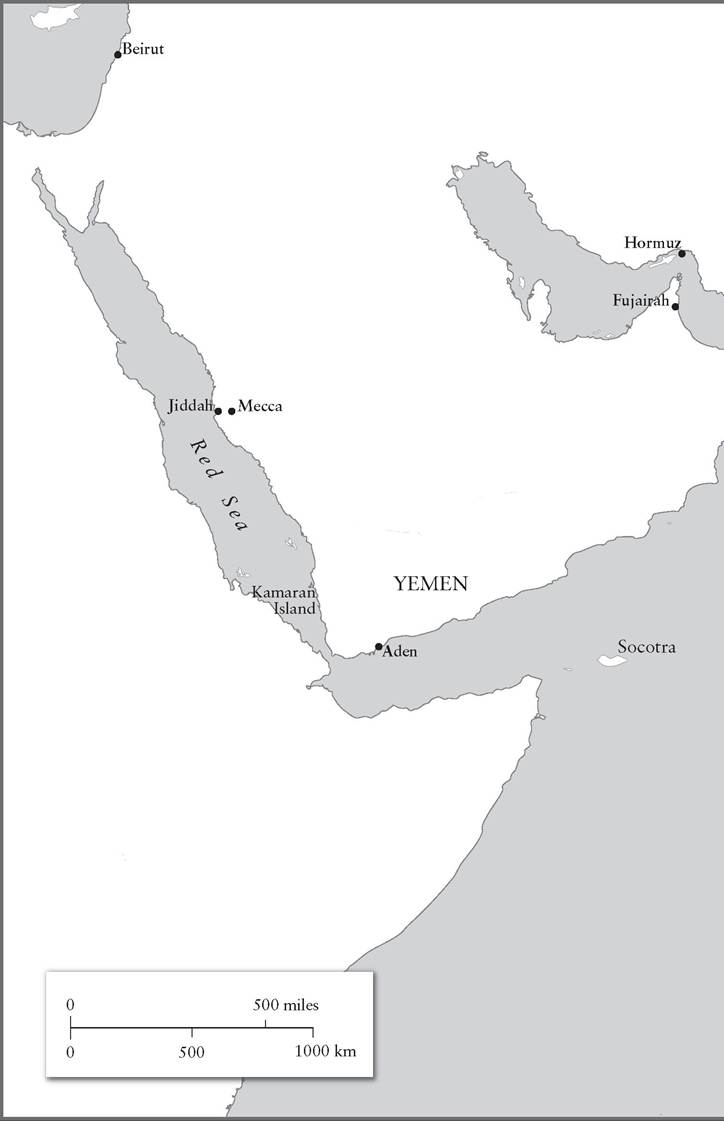
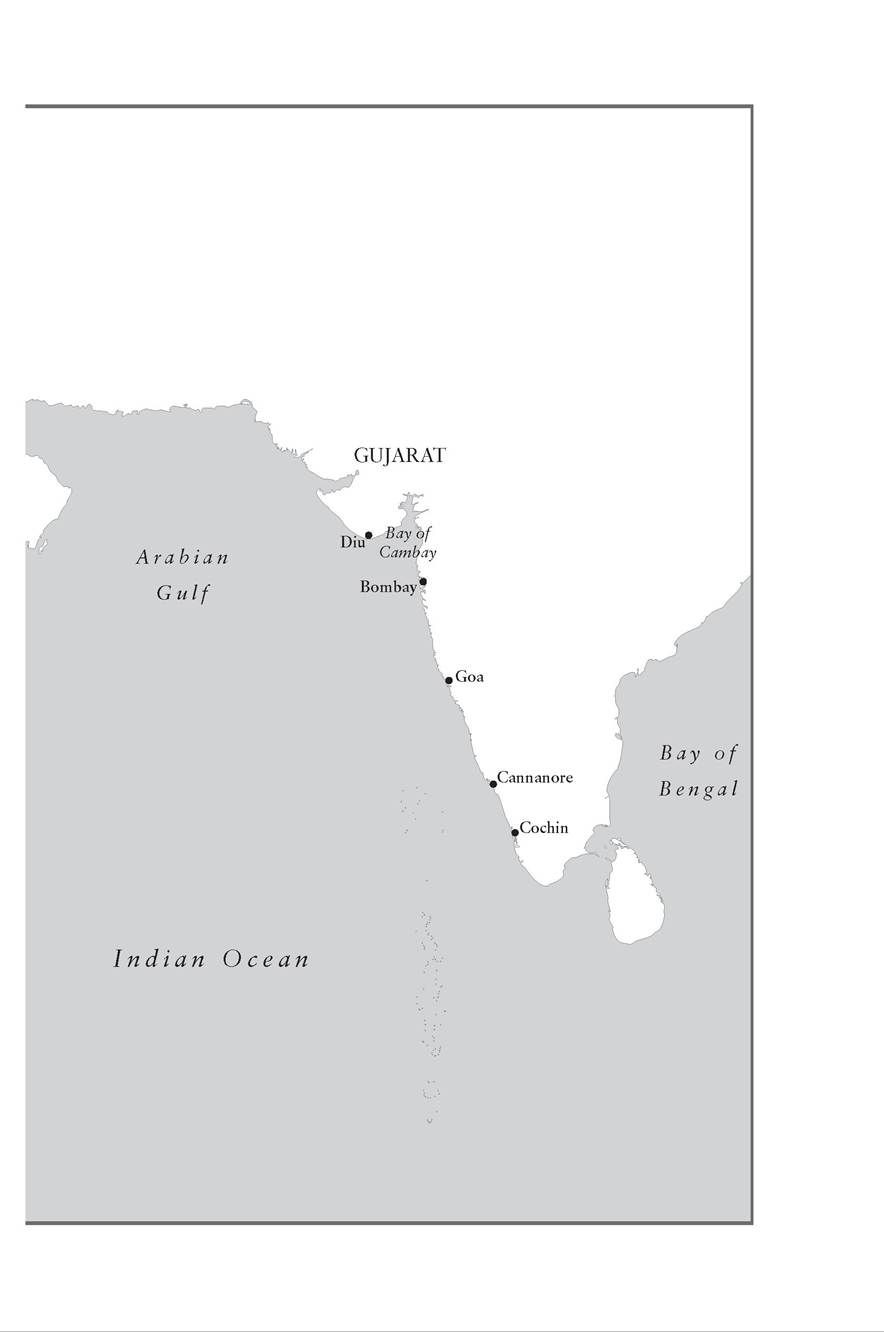
Teldi insisted, the Mamluks could send ambassadors to Cochin and Can- nanore, ordering their rulers, who were also Muslims, to have nothing more to do with the Portuguese, who before long would surely be threatening the holy cities of Islam by way of the Red Sea.3 The Mamluk sultan slowly took action: in 1505 he built up the defences of Jiddah, so as to protect Mecca, and in 1507-9 a Mamluk fleet at last ventured out against the Portuguese. It was well advised to do so, as the Portuguese had thought up a plan to seize Socotra, the island to the south of Yemen that, since the days of Greco-Roman trade, had functioned as a sort of commercial watchtower for traffic leading to Arabia, the Red Sea and east Africa, making it seem a perfect acquisition if only it could be taken. However, the Portuguese soon discovered that it was a barren wasteland and that it lay too far from the Red Sea entrance to give them the strategic advantage they sought, so they abandoned it after four years.4 The real importance of Socotra is not its brief Portuguese occupation but the magnetic force the island exercised upon the Mamluks, who saw how crucial the defence of the waters off Yemen had become.
The son of the ruthless Portuguese admiral Afonso de Albuquerque had noted that there were three places that command the markets of the Indian Ocean: Melaka, Hormuz and Aden.5 By this point the Portuguese threat was becoming more intense and the flashpoint was Hormuz. Hormuz, lying on an island on the Iranian side of the narrow passageway into the Persian Gulf, was a first-class strategic objective of both sides.6 The town itself was a dust-blown port with no natural resources but a large population, maybe as many as 40,000 inhabitants in the early sixteenth century, even more than densely populated Aden. Ralph Fitch, an English traveller who came there in 1583, wrote: ‘there is nothing growing in it but only salt; for their water, wood or victuals and all things necessary come out of Persia, which is about twelve miles from thence.’ But he also saw piles of spices, a ‘great store of pearls’ brought from Bahrain, silk and Persian carpets.7 Hormuz commanded the traffic along the shores of the Indian Ocean linking what are now Oman and Pakistan, as well as the traffic through the Strait of Hormuz up to Basra in Iraq, from which overland routes stretched as far as Aleppo in northern Syria. Its ruler extended his power along the Arabian coast as far as Muscat and up the Gulf as far as Bahrain.
In 1507 Afonso de Albuquerque bullied Hormuz into submission by raiding some of its outstations along the coast of Oman with the usual terrifying violence that spared neither women nor children; he was accompanied by 460 men aboard six ships. Albuquerque formally granted the crown of Hormuz to the twelve-year-old nominal ruler Sayf ad-din, taking care to nominate a vizier and a guardian for the young king as well. This, along with a tribute payment, did not amount to much more than a formal acknowledgement of Portuguese supremacy in a kingdom that was already being torn apart by power struggles within its royal family, quite apart from the fact that the shah of Persia was meddling in its affairs.
The shah sought an outlet to the sea, and he even sent the king of Hormuz a ceremonial bonnet indicating Persian suzerainty over Hormuz.8 At the time there was some prospect of an alliance between the Portuguese and the Persians, whose Shi‘ite shah was said to have his own ambitions to capture Mecca. He was known in the West as the ‘Great Sophy’, meaning Sufi, and the idea of a Persian-Catholic alliance had been bruited about since the late fifteenth century, in the awareness that the Sunni Turks could not abide this Shi‘ite rival. The Portuguese mooted a project whereby spices would be sent through the Persian Gulf rather than up the Red Sea, with the help of the shah, and encouraged the shah to march all the way to Cairo, at which point, presumably, the Red Sea route would come back into operation.9 This was an agreeable fantasy, no doubt, but the Portuguese began to have their doubts about the Great Sophy when the Ottomans scored a great victory over the Persians at the battle of Qaldiran in 1514.Determined to strengthen the Portuguese position in the Indian Ocean, Albuquerque was back in 1515, having now become ‘governor of India’; this time he had 1,500 Portuguese troops with him, impressive testimony to the scale of Portuguese penetration into the Indian Ocean. No rewards were on offer for the earlier submission of Hormuz; the vizier was killed, the fortress of Hormuz was garrisoned, and even the shah of Persia, who was shocked that the Portuguese had seized what he regarded as one of his vassal states, had to accept the new reality, especially when Albuquerque made soothing noises and talked of an alliance between Persia and Portugal against their common enemies, the Mamluk sultan in Egypt and the Ottoman sultan in Turkey.10 Soon after that the dreaded Albuquerque died, but the Portuguese held on to Hormuz for over a century. They did Hormuz some favours, though: in 1518 the Portuguese sent a fleet up the Persian Gulf to defend the claim of the sultan of Hormuz to suzerainty over Bahrain.
The Portuguese were faithful to their vassal in Hormuz.11 Its acquisition enabled Portugal to create a line of ports and forts defending its route towards India; the coastline of Fujairah, the part of the UAE that faces out towards the Indian Ocean, is dotted with pinkish-brown Portuguese forts of impressive solidity. Creating this line of forts was especially important once the decision had been made to make Goa, captured in 1510, the seat of Portuguese government in India.12The Portuguese relied, quite simply, on brute force. They were well aware that their spice trade would never flourish if they had to compete with rivals. Although they were successfully bringing large cargoes of pepper and other spices to Europe, for sale in Lisbon and Antwerp, the quality did not compare well with spices carried through the Red Sea - the long journey in ships filling up with bilge water did not improve the quality of their goods. Therefore they sought as total a monopoly as possible, an enormously ambitious aim in view of the logistical difficulties they faced in maintaining contact across the Atlantic and the Indian Ocean. As far as the spice trade was concerned, the struggle against first the Mamluks and then the Ottomans in the Indian Ocean was a life-and-death struggle. They were well prepared for naval engagements, but the results were mixed. One Mamluk victory, over the fleets of Almeida, the first Portuguese governor of India, in 1508, was followed by humiliation of the Mamluk navy at Diu in northern India, even though several Indian princes had sent aid to the Mamluks.13 In 1511 the Venetians even urged the Mamluks to make common cause with the Ottomans against the Portuguese, for they could see that the lack of wood for shipbuilding was, as ever in Egyptian history, causing problems; so they invited the Mamluks to obtain wood from the Turks, while offering supplies from Venice as well.14
There were two issues here: the exclusion of the Portuguese from the spice trade, but also the defence of the Red Sea, for it was becoming increasingly obvious that the Portuguese hoped to force their way into the Red Sea and gain mastery over the spice trade through Alexandria via the back door. The route around Africa was only an expedient. Once they had conquered the Indian Ocean - as if that were at all possible - the Portuguese dreamed of restoring the Red Sea route, abandoning the costly and dangerous Cape route, and becoming lords of not just Alexandria but Jerusalem. In going after pepper, the Portuguese did not forget their crusading past.15 Whenever the Portuguese sent fleets into the Red Sea they tried to make contact with the emperor of Ethiopia, whom they recognized as the real Prester John, the Christian king who would join their great crusade. An attempt to send two caravels to what were assumed to be the coasts of his empire met with disaster when one of the captains was killed even before his skiff reached the shore. But in 1518 there was some direct contact, generating the recurrent dream of uniting with him in the conquest of not just Egypt but Jerusalem.16
The redoubtable and violent Portuguese commander Albuquerque already had it in mind to force his way into the Red Sea in 1510. His plan was to sail all the way to Suez and destroy the Mamluk fleet anchored there; but in the end he turned against Goa. The Red Sea remained a priority all the same, and was Albuquerque’s target in 1513, when he once again attacked Aden, this time with twenty-four ships, 1,700 Portuguese troops and 1,000 Indian troops. He aimed to set up a blockade preventing shipping from reaching the spice markets of Alexandria. The Portuguese occupied Kamaran Island, much closer to the Red Sea entrance than Socotra, though they were unable to hold it for very long.17 That was the central problem: the Portuguese had to find a way of maintaining the blockade year in, year out if they were to establish the monopoly they sought. Even when they failed to achieve their objectives in the Red Sea, the Portuguese wreaked havoc: in 1517 an armada of thirty-three warships carrying 3,000 troops attacked Jiddah; the threat to Mecca was now real. The Portuguese were thrown back with the loss of 800 lives and several ships.18 Still, the spice markets of Cairo, Alexandria and Beirut were said to be empty in 1518 and 1519. During his campaigns Albuquerque took detailed notes on the layout of the Red Sea, and convinced himself that, following its defeat at Diu, there was no Mamluk fleet left to challenge his supremacy - just fifteen pinnaces at Suez. He told the king of Portugal: ‘if you make yourself powerful in the Red Sea you will have all the riches of the world in your hands.’19
II
In the event, neither the Persians nor the Portuguese gained control of the Red Sea, which fell under Ottoman sovereignty following the Turkish invasion of Egypt in 1517. Historians have made rather a meal of the question why the Ottomans seized Egypt at a time when they were actively competing with the Persian shah in the Middle East. But the Ottoman claim to world dominion had already been made plain by Mehmet II when he conquered the Byzantine Empire and attacked Italy. To occupy a wealthy and populous country that stood at the very heart of the Islamic world was an obvious step.20 The Ottoman conquest of Egypt encouraged the Venetians to continue to work alongside the Turks, who by and large had been willing to protect their shipping; the Venetians traded through Constantinople as well as Alexandria, and the Ottomans enthusiastically fostered the economic revival of their capital, which had shrunk to a collection of villages under late Byzantine rule. The main impulse for the invasion of Syria and Egypt came from an increasingly powerful sense of the role of the Ottoman sultan as a world ruler, ideas derived from Byzantine conceptions of the ruler as Roman emperor, from Turkish ideas of the ruler as Great Khan and from Muslim ideas of the ruler as caliph, a title the sultans began to use with increasing frequency, even if their descent from the Companions of the Prophet was, to say the least, hard to prove. The sultan began to add to his already long list of titles claims to Yemen, Arabia, Ethiopia and Zanzibar, at a time when his direct control of waters connected to the Indian Ocean was limited to the Red Sea port of Jiddah. This was surely a rebuke to King Manuel of Portugal, who had also appropriated a grand array of titles to lands and coasts he did not control. Strategically, though, the move into Egypt made sense: it gave the Turks access to Mecca and Medina, of which they could now claim to be the protectors, and it gave them control of the Red Sea in the face of Portuguese incursions. As masters of the Red Sea they were sucked into the struggle for mastery over the spice trade as well, whose profits accrued to them as rulers of Egypt - so long as the spices actually reached Egypt.21
This reorientation was encouraged by allies in the Indian Ocean; the Muslim kingdom of Gujarat played a central role in the politics and trade not just of north-west India but of the entire Indian Ocean, because its main port, Diu, had become one of the great commercial centres of the entire region and a key ally of first the Mamluks and then the Turks.22 Malik Ayaz, the governor of Diu, a man of uncertain origins (it is even possible he was born in Dubrovnik), had witnessed the failure of the Mamluks to follow through their victory over the Portuguese in 1508, and had witnessed the victory of Almeida’s fleet over the Mamluk navy at Diu the next year. He was a businessman as well as as political leader, so he took a strong interest in the spice trade. He was fortunate that the Portuguese commander, Almeida, was not interested in capturing Diu; one of Almeida’s main demands was the surrender of Muslim mercenaries, who were subjected to the most ghastly punishments: having their hands and feet lopped off before being thrown on a massive funeral pyre; being forced to kill one another; being bound to the mouth of a cannon and then blown to smithereens.23 This was yet another example of the ruthless terror that da Gama, Cabral, Almeida and after him Albuquerque spread in the belief that it was the best way to subdue the cities of the Indian Ocean.
These methods only encouraged Malik Ayaz to look in a different direction: the Mamluks were a failure and their state was in disarray, while the Ottomans must surely be the great power of the future not just in the Mediterranean but in the Indian Ocean. Moreover, following the Ottoman victories, the new governor of Jiddah on the Red Sea coast wrote to Malik Ayaz and to the ruler of Gujarat (who was Malik Ayaz’s superior) informing them that twenty ships from the former Mamluk fleet were now in Jiddah and that the Ottoman sultan, Selim, had ordered the construction of fifty more: ‘if God so wills, with numberless troops he will soon undertake to push these perfidious troublemakers towards a destiny of blackness.’24 Albuquerque even warned the king of Portugal that the Ottomans might be about to invade India; he said that the whole Indian Ocean was in turmoil now that the Ottomans had marched into Egypt, even though just a few years before, when he had captured Melaka (in 1511), everything had been peaceful. More Portuguese fears were realized when Sultan Selim made peace overtures to Venice and Dubrovnik. He also sent an expedition to Yemen, hoping to bring the mouth of the Red Sea under his control, but his death in 1520 put an end to this project. He clearly had every intention of restoring the Red Sea pepper route.25
Under Selim’s successor, Süleyman, known to history as ‘the Magnificent’, these steps into the Indian Ocean were taken further. Süleyman relied on his closest friend, Pargali Ibrahim Pasha, who had been born to a Greek Orthodox family in the Greek-Albanian borderlands, and had been carried off to Constantinople as a slave while still a young boy. There Süleyman had befriended him (they even slept in the same bedroom, which raised the eyebrows of many a courtier); Ibrahim attained great power at court, becoming Grand Vizier, and masterminded Süleyman’s policy in the Indian Ocean and beyond (he was involved in negotiations with the king of France that led to the notorious Franco-Ottoman alliance in the 1530s).26 Ibrahim simplified the commercial taxes levied in Egypt so that merchants were no longer compelled to buy a set amount of pepper at inflated prices from government agents. A basic 10 per cent tax was to be levied instead. The aim was to make Egypt an attractive place to trade in spices, now that Europe was receiving eastern spices via the Cape route as well as through the Red Sea. As a result income from the spice trade held up well, and even in 1527 the Ottoman administration in Egypt seems to have been making more money out of this trade than the Portuguese Crown. The idea that from da Gama’s time onwards the spice trade through the Red Sea dried up, and that Portugal seized a commanding lead at the very start of the sixteenth century, is a myth.27
Lower taxes were a wise means of attracting business; but first of all one had to make sure the goods reached Alexandria. So Ibrahim revived the plans for the conquest of Yemen. In 1525 a corsair in Ibrahim’s service, Selman Reis, reported that
at the moment Yemen has no lord - an empty province. It deserved to be a fine sancak [province]. It would be easy and possible to conquer. Should it be conquered it would be possible to master the lands of India and send every year a great amount of gold and jewels to the Sublime Porte [Constantinople].28
Securing Yemen proved far more difficult than Selman had supposed; its lawlessness and lordlessness returned as the Ottoman commanders, including Selman, became immersed in quarrels among themselves about who was really in charge; this was a regular problem in Ottoman armies and navies. The result was that by the time Selman’s rivals assassinated him in his tent, in 1528, Yemen had been lost and the Portuguese were able to raid into the Red Sea once again. The Portuguese had the added advantage that Süleyman the Magnificent had been focusing on a massive land campaign in Europe that took him to the gates of Vienna. It hardly seemed possible to flush the Portuguese out of the Indian Ocean, and the Ottomans had to concentrate on the defence of the Red Sea, not just as a trade route but as the route to Mecca and Medina.29 In 1531 spices were so hard to find in Alexandria and Beirut that the Venetians ended up filling the holds with grain and beans.30 But there was constant flux. In 1538 the Ottomans at last captured Aden, securing control of access to the Red Sea, and in 1546 they took Basra, leading to control of the Persian Gulf. Six years later, though, they failed to capture Hormuz, the gateway to the Gulf, which the Portuguese had been ruling continuously since 1515; after their defeat at Hormuz, the Ottomans temporarily lost interest in naval campaigns in the Indian Ocean. Süleyman was now looking in other directions: he was increasingly anxious to lay his hands on Cyprus and to challenge Habsburg naval power in the Mediterranean, and relations with Persia continued to fester.31
Just as it makes no sense to consider the Portuguese successes in the Indian Ocean without bearing in mind the Mamluk and Ottoman counterattack, it makes no sense to concentrate on the Turks and the Egyptians to the exclusion of native Indian merchants who also challenged the Portuguese, but more by means of trade than by launching armadas. Gujaratis had been enjoying great success along the trade routes of the Indian Ocean until the Portuguese came along, mainly through their flourishing port at Diu. When Melaka was seized by Albuquerque in 1511, it became more difficult to maintain their links with the spice trade to the east; but there was still plenty of profit to be made by looking westwards towards the Red Sea and Alexandria, so long as Portuguese blockades remained intermittent. Every now and then the Portuguese raided the shores of Gujarat, but Diu on its island in the Bay of Cambay was too well fortified to be taken, and an ambiguous relationship between the rulers of Gujarat and the Portuguese ‘State of India’ became the norm.
Only in the 1530s did Portugal acquire first a small port on the coast, including the fishing harbour of Bombay, and then Diu itself. In 1535 the ruler of Gujarat granted the Portuguese control of the Diu customs house and they were allowed to build a fortress in Diu. His motive was selfpreservation: he had already been defeated by Mughal armies invading India from the north, and had taken refuge in Diu. But he really wanted neither the Mughals nor the Portuguese, ‘Mongols by land and infidels by sea’, to be his masters. Once the Mughal threat had diminished, he appealed to Süleyman to send his navy and recapture the fort at Diu. Süleyman took the request seriously, not simply because the Gujarati envoy offered him a magnificent bejewelled girdle and 250 chests containing 1,270,600 ‘measures of gold’.32 He was turning his attention back to the Indian Ocean after ten years during which the Ottomans had looked away while the Portuguese took charge of the coasts. The Ottomans fitted out their l argest-ever Indian Ocean fleet, made up of ninety ships and 20,000 soldiers. Attempts, not always successful, were made to create a pan-Arabian alliance that would knock out Portuguese power for ever (the ruler of Aden was so terrified by the choice between the devil and the deep blue sea that he fled from the city). The aims were clear and simple:
Since Diu is the centre of all the maritime trade routes of India, from there war can be made against all the principal strongholds of the Portuguese at whatever time desired, none of which will be able to resist. The Portuguese will thus be expelled from India, trade will once again be free as it has been in times past, and the route to Muhammad’s sacred residence will once again be safe from their depredations.33
It was hard to see how they could fail to win Diu, which was defended by a small garrison. The problem with sending out such a large expedition was that it had to be kept watered and fed, and there was no longer any support from the current ruler of Gujarat, his troublesome predecessor Bahadur having been disposed of by the Portuguese. Rumours began to spread that a Portuguese fleet was arriving from Goa any day to relieve Diu. Within twenty days the Turkish commander, Hadim Süleyman Pasha, decided that his siege of Diu was futile and turned back to port in Suez.34 Amazingly, Hadim Süleyman was not beheaded when he returned home after this humiliation, but lived to fight another day. Even after this upset and another failed siege of Diu in 1546, Portuguese relations with Gujarat did not completely disintegrate: in 1572 there were about sixty Portuguese living in the Cambay region, many of whom had become involved in local trade and had intermarried with local women, in the same way that Portuguese settlers in west Africa took local wives.35
The Portuguese began to see that they could not actually create the complete monopoly over the spice trade of which they dreamed. The Ottomans would not let go of the Red Sea; they had trumped the Portuguese by taking Aden in 1538, which ensured that some traffic continued to pass up the Red Sea to Egypt; after about 1540 the Red Sea spice trade underwent a revival. When the Turks took Basra in 1546 they acquired a base in the Persian Gulf, though at the wrong end - what they really needed was control of the passage past Hormuz. Still, with ever-expanding demand for spices in Europe and increased production of spices to meet this demand there was room for more than one route linking the Indian Ocean to Lisbon, Antwerp and other Atlantic ports.36 The Portuguese compromised with the Indian merchants: they allowed local shipping to carry goods back and forth so long as those on board had bought a licence, or cartaz, and they insisted that customs dues were paid at the three major Portuguese stations in the Indian Ocean, Hormuz, Goa and Melaka. They well knew that they were unable to control movements east of Melaka, despite a signal victory over a navy of Javanese junks in the Malacca Strait in 1513. This victory helped guarantee free passage for Portuguese ships as far as Ternate and Tidore, the places Francisco Serrao had identified as centres of the trade in cloves and other costly spices; but, to cite Charles Boxer, ‘Portuguese shipping in this region was merely one more thread in the existing warp and woof of the Malay-Indonesian interport trade.’37
The conquest of Melaka by Albuquerque in 1511 did not bring Portugal mastery over the Malacca Strait, since the expelled sultan still held lands right opposite Melaka in Sumatra; Portuguese territory was limited to a densely populated town and its harbour. As time went by, Indonesians learned to avoid the strait completely, sending spices round the bottom of Sumatra by way of the Sunda Strait, the opening between Sumatra and the next big island, Java. A modus vivendi was reached in the Spice Islands: there was no Portuguese monopoly, but there were enough advantages in letting the Portuguese come and pay for spices to allow them access to the islands. Local rulers learned how to play the Portuguese off against the Spaniards once Spain had gained access to the Moluccas and the Philippines. Generally the Hindu rajahs were more open to contact with the Portuguese, while the Muslim sultans were deeply suspicious of them, with good reason. In many ways the biggest worry back at home in Lisbon was not competition from native merchants so much as the constant attempts by Portuguese merchants to break the Crown monopoly on trade in the most precious spices. Many a Portuguese ship in the South China Sea and the Moluccas was privately owned; and, once again, the Crown had to put up with the situation. The Portuguese also had to face the simple reality that most of the spices garnered in the East Indies were sent not into the Indian Ocean but across the South China Sea to China, as had been the case for centuries. Admittedly, few Chinese ventured out across the waters a century after the Ming voyages had come to an end, but junks from Java kept up the connection instead.38 All this, as will be seen, acted as an allure to the Portuguese as they attempted to build ties to China itself and even to Japan.
The effects of the Ottoman-Portuguese encounter could, then, be felt as far away as the south-western corner of the Pacific Ocean, in the Spice Islands. In the second half of the sixteenth century Ottoman-led fleets even challenged the Portuguese in the East Indies; Melaka came under attack in 1581.39 Although the conflict with the Spanish Habsburgs in the Mediterranean took priority (culminating in the massive defeat of the Ottomans at Lepanto in 1571), a parallel conflict between the Ottomans and the Portuguese continued in the Indian Ocean, and both sides saw themselves as warriors of the faith, even when they were battling for control of lucrative trade routes.
III
At the start of the sixteenth century the Turks were not as well informed about the Indian Ocean as one might expect. Selma Reis, writing in 1525, asserted that ‘the accursed Portuguese’ had captured Melaka ‘from Hindu infidels’, whereas it had been under Muslim rule for many decades.40 One man, however, had the curiosity and the connections that enabled him to situate the Ottoman Empire in the wider world: Piri Reis, corsair, admiral, cartographer and geographer extraordinary.41 Born not later than 1470, in Gallipoli, the seat of a major Ottoman naval arsenal, he began his career while still a boy in the fleet of his uncle, Kemal. Kemal was one of the most successful Barbary corsairs of his day, raiding the Balearic Islands, Sardinia, Sicily, Spain and France with the blessing of the Ottoman sultan.42 Piri took command of his own vessel in a squadron led by his uncle during a bitter war with Venice between 1499 and 1502 that saw key fortresses in the eastern Mediterranean fall to the Turks. After serving briefly under the most feared of all corsairs, Hayrettin Barbarossa, Piri returned to Gallipoli and in 1513 he prepared a world map, of which more shortly.
Next, seeing the direction world affairs were taking, he gravitated towards the Ottoman court, sailing with Ibrahim Pasha, who has been met already, to newly subdued Egypt, where he presented his world map to Sultan Selim. But he had grander ambitions as a geographer; in 1521 he completed the first version of his Book on Navigation, whose importance was rapidly appreciated by Ibrahim Pasha.43 During a storm Ibrahim saw that Piri was consulting his piles of notes and was duly impressed. ‘Finish the book and bring it to me, and we will present it to the Great Ruler of the World, Sultan Süleyman the Lawgiver’ (Selim having died by now). Piri presented Süleyman the Magnificent with a revised edition in 1526, followed by a second world map two years later. He was still active in his seventies, taking command of the Red Sea fleet anchored at Suez, and in 1552 he launched a long-expected attack on Hormuz. At first everything went well: Turkish forces landed on Hormuz Island and surrounded the citadel, which proved to be so impregnable that Ottoman cannons had little effect. When he heard that a Portuguese fleet was heading his way he prudently took refuge deep within the Persian Gulf at Basra, but this was seen as an act of cowardice. The charge of treason was strengthened when he sailed off to Suez on his own with a pile of booty, even though the Ottoman governor of Basra forbade him to do so. Now, without Ibrahim to protect him, his enemies at court turned against him. Earlier in the century Hadim Süleyman had been spared after making a mess of Ottoman naval plans, but Piri Reis was not so lucky; everything depended on the sultan’s whim, and in 1554 he was beheaded in Istanbul.44
At least twenty-six copies of the first version of Piri’s book are known, most of which were copied in the seventeenth century, but one manuscript, now in Dresden, dates from 1554, and another, in Oxford, from 1587. Of sixteen copies of the revised version, several once again are late in date; they are thought mainly to be presentation copies, whereas it has been suggested that the copies of the first version, which are less grand in appearance, were aimed at mariners and used at sea.45 This would make one think that the text was read and had influence over many decades. But, surprisingly, his maps and his book had a limited afterlife; it is not clear that they moulded Ottoman thinking about the world, and this may have been the result of a curious feature of Ottoman civilization: the refusal to permit printing in Turkish and Arabic for several centuries, although Jews and Christians were allowed to set up printing presses in places such as Safed in Galilee.46 At a time when printed versions of Ptolemy’s admittedly incorrect Geography were being widely disseminated, not to mention the enormous world map of Waldseemüller depicting ‘America’, information about the rest of the world was failing to reach a wider Turkish audience. Oddly, by writing in Turkish, Piri Reis cut himself off from the more exalted readers who might have been able to put his information to some use; the languages of high culture in the Ottoman world at this time were Arabic and Persian, and it is not even clear that Piri could write Arabic - it is likely that his second language was the lingua franca, the mix of languages with a base in Spanish and Italian that was used on the seaways of the Mediterranean to communicate with merchants and slaves.47
Since the time of Mehmet the Conqueror, in the mid- to late fifteenth century, the Ottoman court had taken an interest in Western art and letters; but Piri Reis’s connections went deeper, since he had access to secret information. He drew on a very wide range of sources, not by any means all Islamic; the Ottomans were well acquainted with the portolan charts produced by the Catalans, Genoese and Venetians, and a good number of Turkish versions of these maps survive from the period of Piri Reis.48 Piri would have been perfectly familiar with this type of map from his time as a corsair in the western Mediterranean. He said that he used twenty individual maps as well as several world maps to complete his map of 1513; these included an Arab map of India and a Portuguese map of both India and China.49 How he obtained these is a puzzle, especially since the Portuguese were so careful to embargo any information about their discoveries, particularly maps. Further evidence that the Ottomans gained access to western European maps comes from an extraordinary world map of 1519 made in Portugal but preserved in the Topkapi Palace Library in Istanbul. The map shows a circular projection with the South Pole at the centre; it is thus a global map of the southern hemisphere, conceivably created in Lisbon by the court cartographer, Pedro Reinel, and anticipating the route taken by Magellan and Elcano - Magellan would have displayed similar maps while attempting to gain attention first at the court of King Manuel and then at that of Emperor Charles.50 Quite how such a map reached the Ottoman court is a great mystery. The finger has been pointed at Venetian spies, or one could think of Portuguese New Christians of Jewish origin who fled their homeland for the safer setting of the sultan’s capital city. Its apparent theft and its arrival in Istanbul would certainly make an ideal topic for a novel by Orhan Pamuk.
The surviving maps of 1513 and 1528 are just fragments of larger charts showing the entire world, maybe one quarter and one sixth of the total, preserved by accident - most likely they were the parts of the bigger chart that were thought to be not very interesting, while the other parts, showing the Indian Ocean, were worn to bits.51 For these fragments both show the New World, but in a way that would have removed any Turkish fears that Spanish or Portuguese navigators had found a back door into the Spice Islands by taking a westward route across the Atlantic. South America slants south-eastwards and joins a massive southern continent, and there is no break anywhere along the Atlantic coast letting ships pass through somewhere around Panama.52 The 1513 map shows a number of beautifully drawn ships, such as the ship of ‘Mesir Anton the Genoese’, Antonio da Noli, discoverer of the Cape Verde Islands.53 One ship, standing off the coast of South America, carries this label: ‘this is the barque from Portugal that encountered a storm and came to this land’, and another label on the map describes how a Portuguese ship bound for India was blown on to the shores of a new land. Piri knew, correctly, that a ship had been sent back to Portugal with news of the discovery of Brazil, although he did not know that there was a larger fleet that carried on to India. Another label, placed over the point where South America merges into the great southern continent, begins: ‘it is related by the Portuguese infidel that in this place night and day are, at their shortest period, of two hours’ duration’, which shows that Piri Reis was using Portuguese sources of information, and very early ones at that - Magellan had yet to sail, but Vespucci claimed to have reached a long way down the South American coast.54
Piri Reis was aware of the importance of Columbus, to whom he devoted another label, much the longest on the map. There were quite a few crossed wires: he told how ‘Qulunbu’ had presented his idea about crossing the ocean to ‘the eminent men of Genoa’, who replied: ‘O foolish man, the end and boundary of the world is to be found in the West. It is full of the mist of darkness.’ But Piri’s uncle, Kemal Reis, had a Spanish prisoner who claimed to have travelled to the newly discovered land with Qulunbu on three occasions. After a long description of the lands Qulunbu visited, Piri Reis remarked: ‘now these regions have been opened to all and have become well known... The coasts and islands on this map are copied from the map of Qulunbu.’55 Piri tried to reproduce the names of places all along the shores he was mapping, and in the Atlantic islands in between. He understood the importance of this information not just in the grand strategy of the Ottoman Empire face to face with Spain and Portugal, but also as valuable knowledge about the world. In that sense he was the intellectual kinsman of the geographers of Renaissance Spain and Italy, even if he wrote in the Turkish vernacular. This does not mean that he was any the less agitated about the intrusion of Christian infidels into the Indian Ocean or that he had any positive feelings towards the Portuguese whose maps he had been exploiting:
Know that Hormuz is an island. Many merchants visit it... but now, O friend, the Portuguese have come there and built a stronghold on its cape. They control the place and collect the customs - you see into what condition that province has sunk! The Portuguese have vanquished the natives, and their own merchants crowd the warehouses there. Whatever the season, trading cannot happen now without the Portuguese.56
Piri Reis understood, then, that the European irruption into the Indian Ocean had dramatically changed the political and commercial relationship between the Ottoman lands and the rest of the world. Yet, paradoxically, his warnings about the Portuguese were based on knowledge he had derived in part from Spanish and Portuguese maps. Both the Ottomans and the Iberians had acquired a much larger view of a world joined together by maritime connections.
More on the topic 33 The Struggle for the Indian Ocean:
- Let's imagine for a moment that you have the ability to look back in time and follow the change in a typical coral reef community in the Indian Ocean (FIGURE 17.3).
- Contents
- The Indian Ocean ranks among the most long-lived spaces of historical memory and the present burst of historiographical attention to this ocean should be interpreted in this context.
- Piracy in the Indian Ocean
- Narrators of the Indian Ocean
- CHAPTER I Imagining the Indian Ocean
- ‘Our Sea’, 146 BC–AD 150
- Conclusion
- 26 Virgin Islands
- 21 White Bears, Whales and Walruses