Cervid Models
16.6.1 Long-term cervid MAP challenge model
No published studies were found in our literature review where intestinal loop, everted intestine or other short-term models have been used in deer.
Models similar to that described previously for goats should be equally applicable for deer in studying the initial bacterial-host interactions in vivo. In contrast, there is some literature on the long-term cervid challenge model, primarily used for pathogenesis and vaccine efficacy studies. This model may also be useful for evaluation of diagnostic assays and heritable resistance.High levels of heritable resistance and susceptibility to mycobacterial infection are documented in deer (Mackintosh et al., 2000). Deer appear to be a useful host for disclosing diagnostic markers by which to monitor infection (Griffin et al., 2005), protective immunity or resistance to infection. The majority of studies
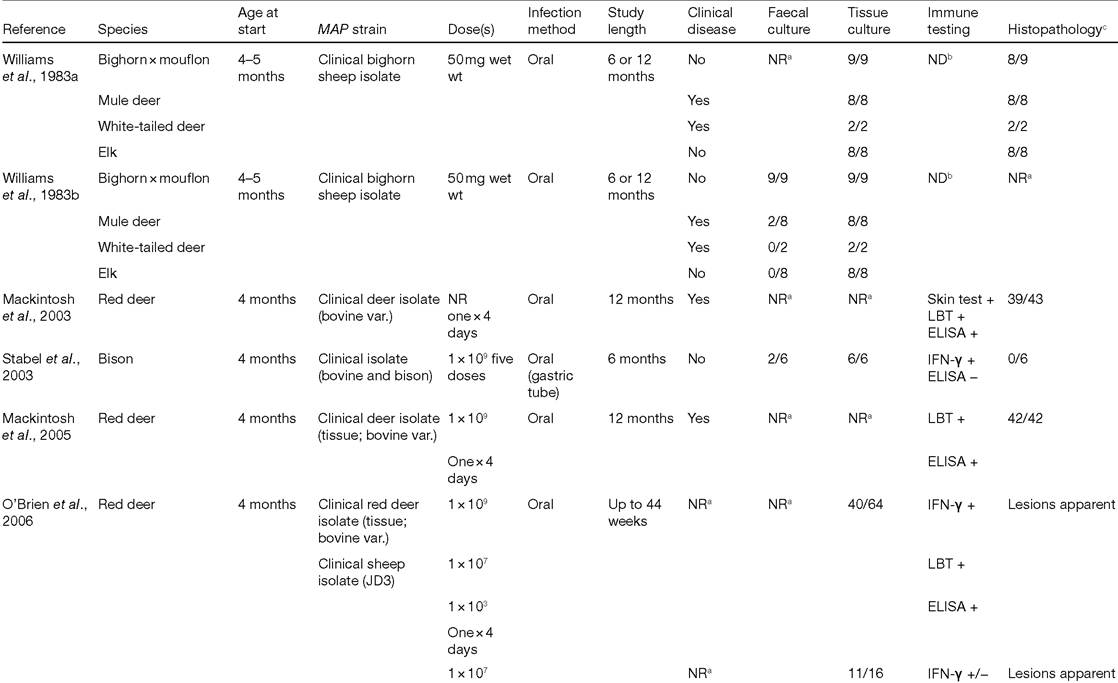
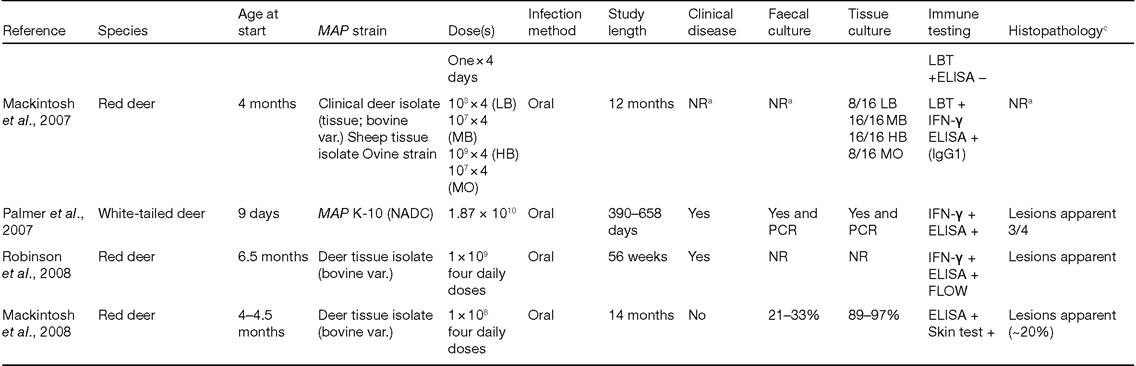
Table 16.6. Cervid and/or exotic ruminant species models for Mycobacterium avium subsp. paratuberculosis (MAP) infection.
co
A.M. Talaat eta∕.
aNR = not reported.
bND = not determined.
cin the cervid model histopathology following necropsy may be used to stratify disease severity.
ELISA, enzyme-linked immunosorbent assay; PCR1 polymerase chain reaction; LBT1 lymphocyte blastogenesis test; FLOW, flow cytometry; IFN, Interferon; LB, Group receiving low doses of a bovine strain of MAP; MB, Group receiving medium doses of a bovine strain of MAP; HB, Group receiving high doses of a bovine strain of MAP; MO, Group receiving medium doses of an ovine strain of MAP.
performed in cervids (Table 16.6) have involved red deer (Cervus elaphus), which seem to be more naturally susceptible (Mackintosh et al., 2003) than other cervids (Williams et al., 1983a, b).
However, white- tailed deer have also been shown to be an effective model (Palmer et al., 2007).Experimentally infected deer have a broad spectrum of responses, ranging from limited infection to extremes of pathology and clinical disease. The range of pathology allows clear stratification and analysis of the impact of interventions (Mackintosh et al., 2007). The predominance of MAP-C strains in naturally infected deer suggests that cervids may provide an alternative experimental challenge model for paratuberculosis in cattle. Red deer may be naturally infected with either MAP-C or MAP-S strains (de Lisle et al., 2006), but they appear more susceptible and develop more severe disease with MAP-C strains (O'Brien et al., 2006). Clinical signs develop in 25-30% of red deer between 4 and 12 months post-bovine strain challenge (Mackintosh et al., 2005). Red deer are recommended as the model of choice for cervid challenge studies.
Strain, dose, route of inoculation and infection or disease endpoints used in cattle and goat models appear to apply equally well to cervids (Hines et al., 2007b). In addition, there is evidence that most of the bovine immunological reagents are useful in studies with red deer, with the known exception of TGFβ (Frank Griffin, Dunedin, 2008, personal communication). A dose of 103 CFU of a MAP-C strain produces equivalent infection and pathology to 106 CFU of a MAP-S strain (O'Brien et al., 2006). Thus, MAP-C strains are preferred, and all challenge parameters in red deer should be the same as those for the bovine and caprine models. A strain with genotype similar to the MAP-C strain, MAP K-10, at the bovine dose (109 organisms, 100 mg) given on
2 consecutive days was recommended as most appropriate for deer challenge studies by the AMSC (Hines et al., 2007b). Age of administration will vary depending on the goals of the study. Deer should be challenged at less than
3 months of age. The relatively early onset of pathology and disease in deer suggest that this model may be cost-effective and informative for study of MAP infection.
Access to deer bloodlines with resistant or susceptible phenotypes for M. bovis infection may be valuable in exploring candidate genes that contribute to heritable resistance to other mycobacterial infections.References
Adams, J., Follett, D., Hamilton, H. and Czuprynski, C. (1993) Effects of administration of anti-CD4 and anti-CD8 monoclonal antibodies on Mycobacterium paratuberculosis infection in intragastrically challenged mice. Immunology Letters 35(2), 183-189. DOI: 10.1016∕0165-2478(93)90089-K.
Allen, A.J., Barrington, G.M., Hamilton, M.J., Stabel, J.R. and Robbe-Austerman, S. (2005) Development of a calf ileal cannulation model to facilitate testing of existing and candidate vaccines for M. avium subsp. paratuberculosis. In: Manning, E.J.B. and Nielsen, S.S. (eds) Proceedings of the 8th International Colloquium for Paratuberculosis. Copenhagen, Denmark, p. 148.
Allen, A.J., Park, K.T., Barrington, G.M., Lahmers, K.K., Hamilton, M.J. et al. (2009) Development of a bovine ileal cannulation model to study the immune response and mechanisms of pathogenesis of paratuberculosis. Clinical and Vaccine Immunology 16(4), 453-463. DOI: 10.1128∕CVI.00347-08.
Arrazuria, R., Molina, E., Mateo-Abad, M., Arostegui, I., Garrido, J.M. et al. (2015) Effect of various dietary regimens on oral challenge with Mycobacterium avium subsp. paratuberculosis in a rabbit model. Research in Veterinary Science 101,80-83. DOI: 10.1016∕j.rvsc.2015.06.006.
Arrazuria, R., Elguezabal, N., Juste, R.A., Derakhshani, H. and Khafipour, E. (2016a) Mycobacterium avium subspecies paratuberculosis infection modifies gut microbiota under different dietary conditions in a rabbit model. Frontiers in Microbiology 7(130), 446. DOI: 10.3389∕fmicb.2016.00446.
Arrazuria, R., Molina, E., Garrido, J.M., Perez, V., Juste, R.A. et al. (2016b) Vaccination sequence effects on immunological response and tissue bacterial burden in paratuberculosis infection in a rabbit model.
Veterinary Research 47(1), 77. DOI: 10.1186∕s13567-016-0360-y.Bannantine, J.P. and Stabel, J.R. (2001) Identification of two Mycobacterium avium subspecies paratuberculosis gene products differentially recognised by sera from rabbits immunised with live mycobacteria but not heat-killed mycobacteria. Journal of Medical Microbiology 50(9), 795-804. DOI: 10.1099/0022-1317-50-9-795.
Bannantine, J.P., Everman, J.L., Rose, S.J., Babrak, L., Katani, R. et al. (2014) Evaluation of eight live attenuated vaccine candidates for protection against challenge with virulent Mycobacterium avium subspecies paratuberculosis in mice. Frontiers in Cellular and Infection Microbiology 4(11), 88. DOI: 10.3389∕fcimb.2014.00088.
Basagoudanavar, S.H., Goswami, P.P. and Tiwari, V. (2006) Cellular immune responses to 35 kDa recombinant antigen of Mycobacterium avium paratuberculosis. Veterinary Research Communications 30(4), 357-367. DOI: 10.1007∕s11259-006-3253-0.
Beard, P.M., Rhind, S.M., Buxton, D., Daniels, M.J., Henderson, D. et al. (2001a) Natural paratuberculosis infection in rabbits in Scotland. Journal of Comparative Pathology 124(4), 290-299. DOI: 10.1053/ jcpa.2001.0466.
Beard, P.M., Stevenson, K., Pirie, A., Rudge, K., Buxton, D. et al. (2001b) Experimental paratuberculosis in calves following inoculation with a rabbit isolate of Mycobacterium avium subsp. paratuberculosis. Journal of Clinical Microbiology 39(9), 3080-3084. DOI: 10.1128∕JCM.39.9.3080-3084.2001.
Begara-McGorum, I., Wildblood, L.A., Clarke, C.J., Connor, K.M., Stevenson, K. et al. (1998) Early im- munopathological events in experimental ovine paratuberculosis. Veterinary Immunology and Immunopathology 63(3), 265-287. DOI: 10.1016∕S0165-2427(98)00107-X.
Begg, D.J. and Griffin, J.F.T. (2005) Vaccination of sheep against M. paratuberculosis: immune parameters and protective efficacy. Vaccine 23(42), 4999-5008. DOI: 10.1016∕j.vaccine.2005.05.031.
Begg, D.J. and Whittington, R.J.
(2008) Experimental animal infection models for Johne's disease, an infectious enteropathy caused by Mycobacterium avium subsp. paratuberculosis. The Veterinary Journal 176(2), 129-145. DOI: 10.1016∕j.tvjl.2007.02.022.Begg, D.J., O'Brien, R., Mackintosh, C.G. and Griffin, J.F.T. (2005) Experimental infection model for Johne's disease in sheep. Infection and Immunity 73(9), 5603-5611. DOI: 10.1128∕IAI.73.9.5603-5611.2005.
Begg, D.J., de Silva, K., Di Fiore, L., Taylor, D.L., Bower, K. et al. (2010) Experimental infection model for Johne's disease using a lyophilised, pure culture, seedstock of Mycobacterium avium subspecies paratuberculosis. Veterinary Microbiology 141(3-4), 301-311. DOI: 10.1016∕j.vetmic.2009.09.007.
Begg, D.J., de Silva, K., Di Fiore, L., Taylor, D.L., Bower, K. et al. (2018a) Corrigendum to ‘Experimental infection model for Johne's disease using a lyophilised, pure culture, seedstock of Mycobacterium avium subspecies paratuberculosis’ [Veterinary Microbiology 141 (2010) 301-311]. Veterinary Microbiology 224, 119. DOI: 10.1016∕j.vetmic.2018.08.023.
Begg, D.J., Plain, K.M., de Silva, K., Gurung, R., Gunn, A. et al. (2018b) Immunopathological changes and apparent recovery from infection revealed in cattle in an experimental model of Johne's disease using a lyophilised culture of Mycobacterium avium subspecies paratuberculosis. Veterinary Microbiology 219, 53-62. DOI: 10.1016∕j.vetmic.2018.03.029.
Brotherston, J.G., Gilmour, N.J.L. and Samuel, J.M.C.A. (1961) Quantitative studies of Mycobacterium johnei in the tissues of sheep. Journal of Comparative Pathology and Therapeutics 71,286-299. DOI: 10.1016∕S0368-1742(61)80035-0.
Bull, T.J., Gilbert, S.C., Sridhar, S., Linedale, R., Dierkes, N. et al. (2007) A novel multi-antigen virally vectored vaccine against Mycobacterium avium subspecies paratuberculosis. PLoS ONE 2(11), e1229. DOI: 10.1371∕journal.pone.0001229.
Bull, T.J., Schock, A., Sharp, J.M., Greene, M., McKendrick, I.J.
et al. (2013) Genomic variations associated with attenuation in Mycobacterium avium subsp. paratuberculosis vaccine strains. BMC Microbiology 13, 11. DOI: 10.1186∕1471-2180-13-11.Bull, T.J., Vrettou, C., Linedale, R., McGuinnes, C., Strain, S. et al. (2014) Immunity, safety and protection of an Adenovirus 5 prime - Modified Vaccinia virus Ankara boost subunit vaccine against Mycobacterium avium subspecies paratuberculosis infection in calves. Veterinary Research 45(1), 112. DOI: 10.1186∕s13567-014-0112-9.
Chandler, R.L. (1961) Infection of laboratory animals with Mycobacterium johnei. I. infection in Swiss white mice and its modification by suramin and cortisone. Journal of Comparative Pathology 71,118-130. DOI: 10.1016∕s0368-1742(61)80015-5.
Chandler, R.L. (1962) Infection of laboratory animals with Mycobacterium johnei. V. Further studies on the comparative susceptibility of C57 black mice. Journal of Comparative Pathology 72, 198-213. DOI: 10.1016∕s0368-1742(62)80024-1.
Chen, L.-H., Kathaperumal, K., Huang, C.-J., McDonough, S.P., Stehman, S. et al. (2008) Immune responses in mice to Mycobacterium avium subsp. paratuberculosis following vaccination with a novel 74F recombinant polyprotein. Vaccine 26(9), 1253-1262. DOI: 10.1016∕j.vaccine.2007.12.014.
Chen, J.-W., Faisal, S.M., Chandra, S., McDonough, S.P., Moreira, M.A.S. et al. (2012) Immunogenicity and protective efficacy of the Mycobacterium avium subsp. paratuberculosis attenuated mutants against challenge in a mouse model. Vaccine 30(19), 3015-3025. DOI: 10.1016/j. vaccine.2011.11.029.
Cooney, M.A., Steele, J.L., Steinberg, H. and Talaat, A.M. (2014) A murine oral model for Mycobacterium avium subsp. paratuberculosis infection and immunomodulation with Lactobacillus casei ATCC 334. Frontiers in Cellular and Infection Microbiology 4, 11. DOI: 10.3389∕fcimb.2014.00011.
de Lisle, G.W., Cannon, M.C., Yates, G.F. and Collins, D.M. (2006) Use of a polymerase chain reaction to subtype Mycobacterium avium subspecies paratuberculosis, an increasingly important pathogen from farmed deer in New Zealand. New Zealand Veterinary Journal 54(4), 195-197. DOI: 10.1080/00480169.2006.36695.
Doyle, T.M. (1953) Susceptibility to Johne's disease in relation to age. The Veterinary Record 65, 363-365.
Doyle, T.M. (1956) Johne's disease. The Veterinary Record 68, 869-878.
Dukes, T.W., Glover, G.J., Brooks, B.W., Duncan, J.R. and Swendrowski, M. (1992) Paratuberculosis in saiga antelope (Saiga tatarica) and experimental transmission to domestic sheep. Journal of Wildlife Diseases 28(2), 161-170. DOI: 10.7589/0090-3558-28.2.161.
Faisal, S.M., Chen, J.-W., Yan, F., Chen, T.-T., Useh, N.M. et al. (2013) Evaluation of a Mycobacterium avium subsp. paratuberculosis leuD mutant as a vaccine candidate against challenge in a caprine model. Clinical and Vaccine Immunology 20(4), 572-581. DOI: 10.1128∕CVI.00653-12.
Ferwerda, G., Kullberg, B.J., de Jong, D.J., Girardin, S.E., Langenberg, D.M.L. etal. (2007) Mycobacterium paratuberculosis is recognized by Toll-like receptors and NOD2. Journal of Leukocyte Biology 82(4), 1011-1018. DOI: 10.1189∕jlb.0307147.
Ghadiali, A.H., Strother, M., Naser, S.A., Manning, E.J.B. and Sreevatsan, S. (2004) Mycobacterium avium subsp. paratuberculosis strains isolated from Crohn's disease patients and animal species exhibit similar polymorphic locus patterns. Journal of Clinical Microbiology 42(11), 5345-5348. DOI: 10.1128/JCM.42.11.5345-5348.2004.
Ghosh, P., Hsu, C., Alyamani, E.J., Shehata, M.M., Al-Dubaib, M.A. et al. (2012) Genome-wide analysis of the emerging infection with Mycobacterium avium subspecies paratuberculosis in the Arabian camels (Camelus dromedarius). PLoS ONE 7(2), e31947. DOI: 10.1371/journal.pone.0031947.
Ghosh, P., Wu, C.-W. and Talaat, A.M. (2013) Key role for the alternative sigma factor, SigH, in the intracellular life of Mycobacterium avium subsp. paratuberculosis during macrophage stress. Infection and Immunity 81(6), 2242-2257. DOI: 10.1128/IAI.01273-12.
Ghosh, P., Steinberg, H. and Talaat, A.M. (2014) Virulence and immunity orchestrated by the global gene regulator sigL in Mycobacterium avium subsp. paratuberculosis. Infection and Immunity 82(7), 30663075. DOI: 10.1128/IAI.00001-14.
Ghosh, P., Shippy, D.C. and Talaat, A.M. (2015) Superior protection elicited by live-attenuated vaccines in the murine model of paratuberculosis. Vaccine 33(51), 7262-7270. DOI: 10.1016/j. vaccine.2015.10.116.
Gilmour, N.J.L. and Brotherston, J.G. (1962) Quantitative studies of Mycobacterium johnei in the tissues of sheep. Journal of Comparative Pathology and Therapeutics 72, 165-169. DOI: 10.1016/ S0368-1742(62)80020-4.
Gilmour, N.J.L., Nisbet, D.I. and Brotherston, J.G. (1965) Experimental oral infection of calves with Mycobacterium johnei. Journal of Comparative Pathology 75(3), 281-286. DOI: 10.1016/0021-9975(65)90033-2.
Gilmour, N.J.L., Angus, K.W. and Mitchell, B. (1977) Intestinal infection and host response to oral administration of Mycobacterium johnei in sheep. Veterinary Microbiology 2(3), 223-235. DOI: 10.1016/0378-1135(77)90015-3.
Gonzalez, J., Geijo, M.V., Garcia-Pariente, C., Verna, A., Corpa, J.M. et al. (2005) Histopathological classification of lesions associated with natural paratuberculosis infection in cattle. Journal of Comparative Pathology 133(2-3), 184-196. DOI: 10.1016/j.jcpa.2005.04.007.
Griffin, J.F.T., Spittle, E., Rodgers, C.R., Liggett, S., Cooper, M. et al. (2005) Immunoglobulin G1 enzyme- linked immunosorbent assay for diagnosis of Johne's disease in red deer (Cervus elaphus). Clinical and Vaccine Immunology 12(12), 1401-1409. DOI: 10.1128/CDLI.12.12.1401-1409.2005.
Gwozdz, J.M. and Thompson, K.G. (2002) Antigen-Induced production of interferon-gamma in samples of peripheral lymph nodes from sheep experimentally inoculated with Mycobacterium avium subsp. paratuberculosis. Veterinary Microbiology 84(3), 243-252. DOI: 10.1016∕S0378-1135(01)00462-X.
Gwozdz, J.M., Thompson, K.G., Manktelow, B.W., Murray, A. and West, D.M. (2000) Vaccination against paratuberculosis of lambs already infected experimentally with Mycobacterium avium subspecies paratuberculosis. Australian Veterinary Journal 78(8), 560-566. DOI: 10.1111∕j.1751-0813.2000. tb11902.x.
Gwozdz, J.M., Thompson, K.G. and Manktelow, B.W. (2001) Lymphocytic neuritis of the ileum in sheep with naturally acquired and experimental paratuberculosis. Journal of Comparative Pathology 124(4), 317-320. DOI: 10.1053∕jcpa.2001.0468.
Hagan, W.A. (1938) Age as a factor in susceptibility to Johne's disease. The Cornell Veterinarian 28, 34-40.
Hamilton, H.L., Cooley, A.J., Adams, J.L. and Czuprynski, C.J. (1991) Mycobacterium paratuberculosis monoassociated nude mice as a paratuberculosis model. Veterinary Pathology 28(2), 146-155. DOI: 10.1177/030098589102800207.
Harding, H.P. (1957) Experimental infection with Mycobacterium johnei. Journal of Comparative Pathology and Therapeutics 67, 37-IN11. DOI: 10.1016∕S0368-1742(57)80005-8.
Hein, W.R., Barber, T., Cole, S.-A., Morrison, L. and Pernthaner, A. (2004) Long-term collection and characterization of afferent lymph from the ovine small intestine. Journal of Immunological Methods 293(1-2), 153-168. DOI: 10.1016∕j.jim.2004.07.008.
Hines, M.E., Stiver, S., Giri, D., Whittington, L., Watson, C. et al. (2007a) Efficacy of spheroplastic and cell- wall competent vaccines for Mycobacterium avium subsp. paratuberculosis in experimentally-challenged baby goats. Veterinary Microbiology 120(3-4), 261-283. DOI: 10.1016∕j.vetmic.2006.10.030.
Hines, M.E., Stabel, J.R., Sweeney, R.W., Griffin, F., Talaat, A.M. et al. (2007b) Experimental challenge models for Johne's disease: a review and proposed international guidelines. Veterinary Microbiology 122(3-4), 197-222. DOI: 10.1016∕j.vetmic.2007.03.009.
Hines, M.E., Turnquist, S.E., Ilha, M.R.S., Rajeev, S., Jones, A.L. et al. (2014) Evaluation of novel oral vaccine candidates and validation of a caprine model of Johne's disease. Frontiers in Cellular and Infection Microbiology 4, 26. DOI: 10.3389∕fcimb.2014.00026.
Huntley, J.F., Stabel, J.R., Paustian, M.L., Reinhardt, T.A. and Bannantine, J.P. (2005) Expression library immunization confers protection against Mycobacterium avium subsp. paratuberculosis infection. Infection and Immunity 73(10), 6877-6884. DOI: 10.1128∕IAI.73.10.6877-6884.2005.
Judge, J., Kyriazakis, I., Greig, A., Allcroft, D.J. and Hutchings, M.R. (2005) Clustering of Mycobacterium avium subsp. paratuberculosis in rabbits and the environment: how hot is a hot spot? Applied and Environmental Microbiology 71(10), 6033-6038. DOI: 10.1128∕AEM.71.10.6033-6038.2005.
Juste, R.A., Garcia Marin, J.F., Peris, B., Saez de Ocariz, C. and Badiola, J.J. (1994) Experimental infection of vaccinated and non-vaccinated lambs with Mycobacterium paratuberculosis. Journal of Comparative Pathology 110(2), 185-194. DOI: 10.1016∕S0021-9975(08)80189-2.
Kathaperumal, K., Park, S.-U., McDonough, S., Stehman, S., Akey, B. et al. (2008) Vaccination with recombinant Mycobacterium avium subsp. paratuberculosis proteins induces differential immune responses and protects calves against infection by oral challenge. Vaccine 26(13), 1652-1663. DOI: 10.1016∕j.vaccine.2008.01.015.
Kathaperumal, K., Kumanan, V., McDonough, S., Chen, L.-H., Park, S.-U. et al. (2009) Evaluation of immune responses and protective efficacy in a goat model following immunization with a cocktail of recombinant antigens and a polyprotein of Mycobacterium avium subsp. paratuberculosis. Vaccine 27(1), 123-135. DOI: 10.1016∕j.vaccine.2008.10.019.
Kaufmann, S.H.E. (2011) Fact and fiction in tuberculosis vaccine research: 10 years later. The Lancet Infectious Diseases 11(8), 633-640. DOI: 10.1016∕S1473-3099(11)70146-3.
Khare, S., Nunes, J.S., Figueiredo, J.F., Lawhon, S.D., Rossetti, C.A. etal. (2009) Early phase morphological lesions and transcriptional responses of bovine ileum infected with Mycobacterium avium subsp. paratuberculosis. Veterinary Pathology 46(4), 717-728. DOI: 10.1354∕vp.08-VP-0187-G-FL.
Kluge, J.P., Merkal, R.S., Monlux, W.S., Larsen, A.B., Kopecky, K.E. et al. (1968) Experimental paratuberculosis in sheep after oral, intratracheal, or intravenous inoculation lesions and demonstration of etiologic agent. American Journal of Veterinary Research 29, 953-962.
Koc, A., Bargen, I., Suwandi, A., Roderfeld, M., Tschuschner, A. et al. (2014) Systemic and mucosal immune reactivity upon Mycobacterium avium ssp. paratuberculosis infection in mice. PLoS ONE 9(4), e94624.
Koets, A.P., Adugna, G., Janss, L.L.G., van Weering, H.J., Kalis, C.H.J. et al. (2000) Genetic variation of susceptibility to Mycobacterium avium subsp. paratuberculosis infection in dairy cattle. Journal of Dairy Science 83(11), 2702-2708. DOI: 10.3168∕jds.S0022-0302(00)75164-2.
Koo, H.C., Park, Y.H., Hamilton, M.J., Barrington, G.M., Davies, C.J. et al. (2004) Analysis of the immune response to Mycobacterium avium subsp. paratuberculosis in experimentally infected calves. Infection and Immunity 72(12), 6870-6883. DOI: 10.1128∕IAI.72.12.6870-6883.2004.
Krishnappa, G., Jagannath, C. and Rao, B.U. (1989) The specificity of antibody response in experimental and natural bovine paratuberculosis studied by crossed immunoelectrophoresis with intermediate gel. Veterinary Microbiology 21(1), 67-78. DOI: 10.1016/0378-1135(89)90019-9.
Kurade, N.P., Tripathi, B.N., Rajukumar, K. and Parihar, N.S. (2004) Sequential development of histologic lesions and their relationship with bacterial isolation, fecal shedding, and immune responses during progressive stages of experimental infection of lambs with Mycobacterium avium subsp. paratuberculosis. Veterinary Pathology 41(4), 378-387. DOI: 10.1354∕vp.41-4-378.
Larsen, A.B., Merkal, R.S. and Moon, H.W. (1974) Evaluation of a paratuberculosis vaccine given to calves before infection. American Journal of Veterinary Research 35, 367-369.
Larsen, A.B., Merkal, R.S. and Cutlip, R.C. (1975) Age of cattle as related to resistance to infection with Mycobacterium paratuberculosis. American Journal of Veterinary Research 36, 255-257.
Larsen, A.B., Moyle, A. I. and Himes, E.M. (1978) Experimental vaccination of cattle against paratuberculosis (Johne's disease) with killed bacterial vaccines: a controlled field study. American Journal of Veterinary Research 39, 65-69.
Mackintosh, C.G., Qureshi, T., Waldrup, K., Labes, R.E., Dodds, K.G. et al. (2000) Genetic resistance to experimental infection with Mycobacterium bovis in red deer [Cervus elaphus). Infection and Immunity 68(3), 1620-1625. DOI: 10.1128∕IAI.68.3.1620-1625.2000.
Mackintosh, C., Labes, R., De Lisle, G. and Griffin, J. (2003) Experimental challenge trial of novel Johne's disease vaccine. Proceedings of the Deer Branch of the New Zealand Veterinary Association, The Deer Branch New Zealand Veterinary Association.
Mackintosh, C.G., Labes, R.E. and Griffin, J.F.T. (2005) The effect of Johne's vaccination on tuberculin testing in farmed red deer (Cervus elaphus). New Zealand Veterinary Journal 53(4), 216-222. DOI: 10.1080/00480169.2005.36549.
Mackintosh, C.G., Labes, R.E., Clark, R.G., de Lisle, G.W. and Griffin, J.F.T. (2007) Experimental infections in young red deer (Cervus elaphus) with a bovine and an ovine strain of Mycobacterium avium subsp paratuberculosis. New Zealand Veterinary Journal 55(1), 23-29. DOI: 10.1080/00480169.2007.36731.
Mackintosh, C.G., Labes, R.E., Thompson, B.R., Clark, R.G., de Lisle, G.W. et al. (2008) Efficacy, immune responses and side-effects of vaccines against Johne's disease in young red deer (Cervus elaphus) experimentally challenged with Mycobacterium avium subsp paratuberculosis. New Zealand Veterinary Journal 56(1), 1-9. DOI: 10.1080/00480169.2008.36797.
Malamo, M., Okazaki, K., Sakoda, Y. and Kida, H. (2007) Carboxyl terminus of the 34 kDa protein of Mycobacterium paratuberculosis shares homologous B-cell epitopes with Mycobacterium avium and Mycobacterium intracellulare. The Veterinary Record 161,853-857.
McDonald, W.L., Ridge, S.E., Hope, A.F. and Condron, R.J. (1999) Evaluation of diagnostic tests for Johne's disease in young cattle. Australian Veterinary Journal 77(2), 113-119. DOI: 10.1111/j.1751- 0813.1999.tb11679.x.
Meissner, T., Eckelt, E., Basler, T., Meens, J., Heinzmann, J. et al. (2014) The Mycobacterium avium ssp. paratuberculosis specific mptD gene is required for maintenance of the metabolic homeostasis necessary for full virulence in mouse infections. Frontiers in cellular and infection microbiology 4, 110. DOI: 10.3389/fcimb.2014.00110.
Merkal, R.S., Kluge, J.P., Monlux, W.S., Larsen, A.B., Kopecky, K.E. et al. (1968a) Experimental paratuberculosis in sheep after oral, intratracheal, or intravenous inoculation: histochemical localization of hydrolase activities. American Journal of Veterinary Research 29, 985-994.
Merkal, R.S., Larsen, A.B., Kopecky, K.E., Kluge, J.P., Monlux, W.S. et al. (1968b) Experimental paratuberculosis in sheep after oral, intratracheal, or intravenous inoculation: serologic and intradermal tests. American Journal of Veterinary Research 29, 963-969.
Mokresh, A.H. and Butler, D.G. (1990) Granulomatous enteritis following oral inoculation of newborn rabbits with Mycobacterium paratuberculosis of bovine origin. Canadian Journal of Veterinary Research 54, 313-319.
Mobius, P., Luyven, G., Hotzel, H. and Kohler, H. (2008) High genetic diversity among Mycobacterium avium subsp. paratuberculosis strains from German cattle herds shown by combination of IS900 restriction fragment length polymorphism analysis and mycobacterial interspersed repetitive unitvariable-number tandem-repeat typing. Journal of Clinical Microbiology 46(3), 972-981. DOI: 10.1128/JCM.01801-07.
Mokresh, A.H., Czuprynski, C.J. and Butler, D.G. (1989) A rabbit model for study of Mycobacterium paratuberculosis infection. Infection and Immunity 57(12), 3798-3807. DOI: 10.1128/ IAI.57.12.3798-3807.1989.
Momotani, E., Whipple, D.L., Thiermann, A.B. and Cheville, N.F. (1988) Role of M cells and macrophages in the entrance of Mycobacterium paratuberculosis into domes of ileal Peyer's patches in calves. Veterinary Pathology 25(2), 131-137. DOI: 10.1177/030098588802500205.
Motiwala, A.S., Amonsin, A., Strother, M., Manning, E.J.B., Kapur, V. et al. (2004) Molecular epidemiology of Mycobacterium avium subsp. paratuberculosis isolates recovered from wild animal species. Journal of Clinical Microbiology 42(4), 1703-1712. DOI: 10.1128/JCM.42.4.1703-1712.2004.
Mullerad, J., Hovav, A.-H., Fishman, Y., Barletta, R.G. and Bercovier, H. (2002a) Antigenicity of Mycobacterium paratuberculosis superoxide dismutase in mice. FEMS Immunology & Medical Microbiology 34(1), 81-88. DOI: 10.1111∕j.1574-695X.2002.tb00606.x.
Mullerad, J., Michal, I., Fishman, Y., Hovav, A.-H., Barletta, R.G. et al. (2002b) The immunogenicity of Mycobacterium paratuberculosis 85B antigen. Medical Microbiology and Immunology 190(4), 179187. DOI: 10.1007∕s00430-001-0104-z.
Mullerad, J., Hovav, A.-H., Nahary, R., Fishman, Y. and Bercovier, H. (2003) Immunogenicity of a 16.7 kDa Mycobacterium paratuberculosis antigen. Microbial Pathogenesis 34(2), 81-90. DOI: 10.1016/ S0882-4010(02)00209-7.
Munjal, S.K., Tripathi, B.N. and Paliwal, O.P. (2005) Progressive immunopathological changes during early stages of experimental infection of goats with Mycobacterium avium subspecies paratuberculosis. Veterinary Pathology 42(4), 427-436. DOI: 10.1354∕vp.42-4-427.
Mutwiri, G.K., Butler, D.G., Rosendal, S. and Yager, J. (1992) Experimental infection of severe combined immunodeficient beige mice with Mycobacterium paratuberculosis of bovine origin. Infection and Immunity 60(10), 4074-4079. DOI: 10.1128/IAI.60.10.4074-4079.1992.
Mutwiri, G.K., Kosecka, U., Benjamin, M., Rosendal, S., Perdue, M. et al. (2001) Mycobacterium avium subspecies paratuberculosis triggers intestinal pathophysiologic changes in beige/scid mice. Comparative Medicine 51, 538-544.
Mutwiri, G.K., Rosendal, S., Kosecka, U., Yager, J.A., Perdue, M. etal. (2002) Adoptive transfer of BALB/c mouse splenocytes reduces lesion severity and induces intestinal pathophysiologic changes in the Mycobacterium avium subspecies paratuberculosis beige/scid mouse model. Comparative Medicine 52, 332-341.
Nisbet, D.I., Gilmour, N.J.L. and Brotherston, J.G. (1962) Quantitative studies of Mycobacterium johnei in tissues of sheep. Journal of Comparative Pathology and Therapeutics 72, 80-IN19. DOI: 10.1016/ S0368-1742(62)80009-5.
O'Brien, R., Mackintosh, C.G., Bakker, D., Kopecna, M., Pavlik, I. etal. (2006) Immunological and molecular characterization of susceptibility in relationship to bacterial strain differences in Mycobacterium avium subsp. paratuberculosis infection in the red deer [Cervus elaphus). Infection and Immunity 74(6), 3530-3537. DOI: 10.1128/IAI.01688-05.
Palmer, M.V., Stabel, J.R., Waters, W.R., Bannantine, J.P. and Miller, J.M. (2007) Experimental infection of white-tailed deer (Odocoileus virginianus) with Mycobacterium avium subsp. paratuberculosis. Journal of Wildlife Diseases 43(4), 597-608. DOI: 10.7589/0090-3558-43.4.597.
Paustian, M.L., Amonsin, A., Kapur, V. and Bannantine, J.P. (2004) Characterization of novel coding sequences specific to Mycobacterium avium subsp. paratuberculosis: implications for diagnosis of Johne's disease. Journal of Clinical Microbiology 42(6), 2675-2681. DOI: 10.1128/ JCM.42.6.2675-2681.2004.
Payne, J.M. and Rankin, J.D. (1961 a) A comparison of the pathogenesis of experimental Johne's disease in calves and cows. Research in Veterinary Science 2(2), 175-179. DOI: 10.1016/ S0034-5288(18)34971-3.
Payne, J.M. and Rankin, J.D. (1961 b) The pathogenesis of experimental Johne's disease in calves. Research in Veterinary Science 2(2), 167-176. DOI: 10.1016/S0034-5288(18)34970-1.
Rankin, J.D. (1958) The experimental infection of cattle with Mycobacterium johnei. I. Calves inoculated intravenously. Journal of Comparative Pathology and Therapeutics 68, 331-IN24.
Rankin, J.D. (1961a) The experimental infection of cattle with Mycobacterium johnei. II. Adult cattle inoculated intravenously. Journal of Comparative Pathology and Therapeutics 71,6-9.
Rankin, J.D. (1961b) The experimental infection of cattle with Mycobacterium johnei. III. Calves maintained in an infectious environment. Journal of Comparative Pathology and Therapeutics 71, 10-15.
Rankin, J.D. (1962) The experimental infection of cattle with Mycobacterium johnei. IV. Adult cattle maintained in an infectious environment. Journal of Comparative Pathology and Therapeutics 72, 113-117.
Reddacliff, L.A. and Whittington, R.J. (2003) Experimental infection of weaner sheep with S strain Mycobacterium avium subsp. paratuberculosis. Veterinary Microbiology 96(3), 247-258. DOI: 10.1016∕j.vetmic.2003.07.004.
Reddacliff, L.A., McClure, S.J. and Whittington, R.J. (2004) Immunoperoxidase studies of cell mediated immune effector cell populations in early Mycobacterium avium subsp. paratuberculosis infection in sheep. Veterinary Immunology and Immunopathology 97(3-4), 149-162. DOI: 10.1016/j. vetimm.2003.09.001.
Robinson, M., O'Brien, R., Mackintosh, C. and Griffin, F. (2008) Differential immune responses of red deer (Cervus elaphus) following experimental challenge with Mycobacterium avium subsp. paratuberculosis. Clinical and Vaccine Immunology 15(6), 963-969. DOI: 10.1128∕CVI.00031-08.
Rosseels, V., Marche, S., Roupie, V., Govaerts, M., Godfroid, J. et al. (2006) Members of the 30- to 32-kilodalton mycolyl transferase family (Ag85) from culture filtrate of Mycobacterium avium subsp. paratuberculosis are immunodominant Th1-type antigens recognized early upon infection in mice and cattle. Infection and Immunity 74(1), 202-212. DOI: 10.1128∕IAI.74.1.202-212.2006.
Saxegaard, F. (1990) Experimental infection of calves with an apparently specific goat-pathogenic strain of Mycobacterium paratuberculosis. Journal of Comparative Pathology 102(2), 149-156. DOI: 10.1016/ S0021-9975(08)80120-X.
Scandurra, G.M., de Lisle, G.W., Cavaignac, S.M., Young, M., Kawakami, R.P. et al. (2010) Assessment of live candidate vaccines for paratuberculosis in animal models and macrophages. Infection and immunity 78(3), 1383-1389. DOI: 10.1128∕IAI.01020-09.
Secott, T.E., Lin, T.L. and Wu, C.C. (2002) Fibronectin attachment protein is necessary for efficient attachment and invasion of epithelial cells by Mycobacterium avium subsp. paratuberculosis. Infection and Immunity 70(5), 2670-2675. DOI: 10.1128∕IAI.70.5.2670-2675.2002.
Secott, T.E., Lin, T.L. and Wu, C.C. (2004) Mycobacterium avium subsp. paratuberculosis fibronectin attachment protein facilitates M-cell targeting and invasion through a fibronectin bridge with host integrins. Infection and Immunity 72(7), 3724-3732. DOI: 10.1128∕IAI.72.7.3724-3732.2004.
Settles, E.W., Kink, J.A. and Talaat, A. (2014) Attenuated strains of Mycobacterium avium subspecies paratuberculosis as vaccine candidates against Johne's disease. Vaccine 32(18), 2062-2069. DOI: 10.1016∕j.vaccine.2014.02.010.
Sevilla, I., Singh, S.V., Garrido, J.M., Aduriz, G., Rodriguez, S. etal. (2005) Tipificacion molecular de cepas de Mycobacterium avium subespecie paratuberculosis de diferentes huespedes y regiones. Revue Scientifique et Technique de l’OIE 24(3), 1061-1066. DOI: 10.20506∕rst.24.3.1634.
Sevilla, I., Garrido, J.M., Geijo, M. and Juste, R.A. (2007) Pulsed-field gel electrophoresis profile homogeneity of Mycobacterium avium subsp. paratuberculosis isolates from cattle and heterogeneity of those from sheep and goats. BMC Microbiology 7, 18. DOI: 10.1186∕1471-2180-7-18.
Shin, S.J., Wu, C.-W., Steinberg, H. and Talaat, A.M. (2006) Identification of novel virulence determinants in Mycobacterium paratuberculosis by screening a library of insertional mutants. Infection and Immunity 74(7), 3825-3833. DOI: 10.1128∕IAI.01742-05.
Shippy, D.C., Lemke, J.J., Berry, A., Nelson, K., Hines, M.E. et al. (2017) Superior protection from live- attenuated vaccines directed against Johne's disease. Clinical and Vaccine Immunology 24(1). DOI: 10.1128∕CVI.00478-16.
SigurSardottir, O.G., Press, C.M., Saxegaard, F. and Evensen, 0. (1999) Bacterial isolation, immunological response, and histopathological lesions during the early subclinical phase of experimental infection of goat kids with Mycobacterium avium subsp. paratuberculosis. Veterinary Pathology 36(6), 542-550. DOI: 10.1354∕vp.36-6-542.
SigurSardottir, O.G., Press, C.M. and Evensen, 0. (2001) Uptake of Mycobacterium avium subsp. paratuberculosis through the distal small intestinal mucosa in goats: an ultrastructural study. Veterinary Pathology 38(2), 184-189. DOI: 10.1354∕vp.38-2-184.
SigurSardottir, O.G., Bakke-McKellep, A.M., Djonne, B. and Evensen, 0. (2005) Mycobacterium avium subsp. paratuberculosis enters the small intestinal mucosa of goat kids in areas with and without Peyer's patches as demonstrated with the everted sleeve method. Comparative Immunology, Microbiology and Infectious Diseases 28(3), 223-230. DOI: 10.1016∕j.cimid.2005.01.004.
Simutis, FJ., Cheville, N.F. and Jones, D.E. (2005) Investigation of antigen-specific T-cell responses and subcutaneous granuloma development during experimental sensitization of calves with Mycobacterium avium subsp paratuberculosis. American Journal of Veterinary Research 66(3), 474482. DOI: 10.2460∕ajvr.2005.66.474.
Stabel, J.R. and Ackermann, M.R. (2002) Temporal Mycobacterium paratuberculosis infection in T-cell receptor (TCR)-α and TCR-δ-deficient mice. Veterinary Immunology and Immunopathology 89(3-4), 127-132. DOI: 10.1016∕S0165-2427(02)00167-8.
Stabel, J.R. and Robbe-Austerman, S. (2011) Early immune markers associated with Mycobacterium avium subsp. paratuberculosis infection in a neonatal calf model. Clinical and Vaccine Immunology 18(3), 393-405. DOI: 10.1128∕CVI.00359-10.
Stabel, J.R., Ackermann, M.R. and Goff, J.P. (1996) Comparison of polyclonal antibodies to three different preparations of Mycobacterium paratuberculosis in immunohistochemical diagnosis of Johne's disease in cattle. Journal of Veterinary Diagnostic Investigation 8(4), 469-473. DOI: 10.1177/104063879600800412.
Stabel, J.R., Palmer, M.V. and Whitlock, R.H. (2003) Immune responses after oral inoculation of weanling bison or beef calves with a bison or cattle isolate of Mycobacterium avium subsp. paratuberculosis. Journal of Wildlife Diseases 39(3), 545-555. DOI: 10.7589/0090-3558-39.3.545.
Stabel, J.R., Palmer, M.V., Harris, B., Plattner, B., Hostetter, J. etal. (2009) Pathogenesis of Mycobacterium avium subsp. paratuberculosis in neonatal calves after oral or intraperitoneal experimental infection. Veterinary Microbiology 136(3-4), 306-313. DOI: 10.1016∕j.vetmic.2008.11.025.
Stewart, D.J., Vaughan, J.A., Stiles, P.L., Noske, PJ., Tizard, M.L.V. et al. (2004) A long-term study in Merino sheep experimentally infected with Mycobacterium avium subsp. paratuberculosis: clinical disease, faecal culture and immunological studies. Veterinary Microbiology 104(3-4), 165-178. DOI: 10.1016∕j.vetmic.2004.09.007.
Stewart, D.J., Vaughan, J.A., Stiles, P.L., Noske, P.J., Tizard, M.L.V. et al. (2006) A long-term study in Angora goats experimentally infected with Mycobacterium avium subsp. paratuberculosis: clinical disease, faecal culture and immunological studies. Veterinary Microbiology 113(1-2), 13-24. DOI: 10.1016∕j.vetmic.2005.09.015.
Stewart, D.J., Vaughan, J.A., Stiles, P.L., Noske, P.J., Tizard, M.L.V. et al. (2007) A long-term bacteriological and immunological study in Holstein-Friesian cattle experimentally infected with Mycobacterium avium subsp. paratuberculosis and necropsy culture results for Holstein-Friesian cattle, Merino sheep and Angora goats. Veterinary Microbiology 122(1-2), 83-96. DOI: 10.1016∕j. vetmic.2006.12.030.
Storset, A.K., Hasvold, H.J., Valheim, M., Brun-Hansen, H., Berntsen, G. et al. (2001) Subclinical paratuberculosis in goats following experimental infection. Veterinary Immunology and Immunopathology 80(3-4), 271-287. DOI: 10.1016∕S0165-2427(01)00294-X.
Streeter, M.N., Barron, S.J., Wagner, D.G., Hibberd, C.A., Owens, F.N. etal. (1991) Technical note: a double L intestinal cannula for cattle. Journal of Animal Science 69(6), 2601. DOI: 10.2527∕1991.6962601x.
Stuart, P. (1965) Vaccination against Johne's disease in cattle exposed to experimental infection. British Veterinary Journal 121,289-318. DOI: 10.1016∕S0007-1935(17)41102-X.
Suwandi, A., Bargen, I., Roy, B., Pils, M.C., Krey, M. et al. (2014) Experimental colitis is exacerbated by concomitant infection with Mycobacterium avium ssp. paratuberculosis. Inflammatory Bowel Diseases 20(11), 1962-1971. DOI: 10.1097∕MIB.0000000000000157.
Sweeney, R.W., Uzonna, J., Whitlock, R.H., Habecker, P.L., Chilton, P. et al. (2006) Tissue predilection sites and effect of dose on Mycobacterium avium subs. paratuberculosis organism recovery in a short-term bovine experimental oral infection model. Research in Veterinary Science 80(3), 253-259. DOI: 10.1016∕j.rvsc.2005.07.007.
Szilagyi, M., Kormendy, B., Suri, A., Tuboly, S. and Nagy, G. (1989) Experimental paratuberculosis (Johne's disease) - studies on biochemical parameters in cattle. Archiv fur experimentelle Veterinarmedizin 43(3), 463-470.
Talaat, A.M. and Stemke-Hale, K. (2005) Expression library immunization: a road map for discovery of vaccines against infectious diseases. Infection and Immunity 73(11), 7089-7098. DOI: 10.1128∕ IAI.73.11.7089-7098.2005.
Tanaka, S., Sato, M., Taniguchi, T. and Yokomizo, Y. (1994) Histopathological and morphometrical comparison of granulomatous lesions in BALB∕c and C3H∕HeJ mice inoculated with Mycobacterium paratuberculosis. Journal of Comparative Pathology 110(4), 381-388. DOI: 10.1016∕ S0021-9975(08)80315-5.
Tanaka, S., Itohara, S., Sato, M., Taniguchi, T. and Yokomizo, Y. (2000) Reduced formation of granulomata in gamma(delta) T cell knockout BALB/c mice inoculated with Mycobacterium avium subsp. paratuberculosis. Veterinary Pathology 37(5), 415-421. DOI: 10.1354∕vp.37-5-415.
Thorel, M.F., Pardon, P., Irgens, K., Marly, J. and Lechopier, P. (1984) Paratuberculose experimentale: pouvoir pathogene chez le veau de souches de Mycobacteries mycobactine-dependantes. Annales de Recherches Veterinaires 15, 365-374.
Usda-Aphis (2010) Uniform Program Standards for the Voluntary Bovine Johne’s Disease Control Program. Usda-Aphis, Washington, DC.
Uzonna, J.E., Chilton, P., Whitlock, R.H., Habecker, P.L., Scott, P. et al. (2003) Efficacy of commercial and field-strain Mycobacterium paratuberculosis vaccinations with recombinant IL-12 in a bovine experimental infection model. Vaccine 21(23), 3101-3109. DOI: 10.1016∕S0264-410X(03)00261-5.
Valheim, M., Storset, A.K., Aleksersen, M., Brun-Hansen, H. and C McL Press., (2002) Lesions in subclini- cal paratuberculosis of goats are associated with persistent gut-associated lymphoid tissue. Journal of Comparative Pathology 127(2-3), 194-202. DOI: 10.1053∕jcpa.2002.0581.
Van Kruiningen, H.J., Chiodini, R.J., Thayer, W.R., Coutu, J.A., Merkal, R.S. et al. (1986) Experimental disease in infant goats induced by a Mycobacterium isolated from a patient with Crohn's disease. A preliminary report. Digestive Diseases and Sciences 31(12), 1351-1360. DOI: 10.1007/BF01299814.
Vaughan, J.A., Lenghaus, C., Stewart, D.J., Tizard, M.L. and Michalski, W.P. (2005) Development of a Johne's disease infection model in laboratory rabbits following oral administration of Mycobacterium avium subspecies paratuberculosis. Veterinary Microbiology 105(3-4), 207-213. DOI: 10.1016/j. vetmic.2004.10.019.
Veazey, R.S., Horohov, D.W., Krahenbuhl, J.L., Taylor, H.W., Oliver, J.L. et al. (1995) Comparison of the resistance of C57BL/6 and C3H∕He mice to infection with Mycobacterium paratuberculosis. Veterinary Microbiology 47(1-2), 79-87. DOI: 10.1016∕0378-1135(95)00057-H.
Waters, W.R., Miller, J.M., Palmer, M.V., Stabel, J.R., Jones, D.E. et al. (2003) Early induction of humoral and cellular immune responses during experimental Mycobacterium avium subsp. paratuberculosis infection of calves. Infection and Immunity 71(9), 5130-5138. DOI: 10.1128/IAI.71.9.5130-5138.2003.
Williams, E.S., Snyder, S.P. and Martin, K.L. (1983a) Experimental infection of some North American wild ruminants and domestic sheep with Mycobacterium paratuberculosis: clinical and bacteriological findings. Journal of Wildlife Diseases 19(3), 185-191. DOI: 10.7589/0090-3558-19.3.185.
Williams, E.S., Snyder, S.P. and Martin, K.L. (1983b) Pathology of spontaneous and experimental infection of North American wild ruminants with Mycobacterium paratuberculosis. Veterinary Pathology 20(3), 274-290. DOI: 10.1177/030098588302000304.
Wu, C.W., Livesey, M., Schmoller, S.K., Manning, E.J.B., Steinberg, H. et al. (2007a) Invasion and persistence of Mycobacterium avium subsp. paratuberculosis during early stages of Johne's disease in calves. Infection and Immunity 75(5), 2110-2119. DOI: 10.1128/IAI.01739-06.
Wu, C.W., Schmoller, S.K., Shin, S.J. and Talaat, A.M. (2007b) Defining the stressome of Mycobacterium avium subsp. paratuberculosis in vitro and in naturally infected cows. Journal of Bacteriology 189(21), 7877-7886. DOI: 10.1128/JB.00780-07.
Wu, C.W., Schmoller, S.K., Bannantine, J.P., Eckstein, T.M., Inamine, J.M. et al. (2009) A novel cell wall lipopeptide is important for biofilm formation and pathogenicity of Mycobacterium avium subspecies paratuberculosis. Microbial Pathogenesis 46(4), 222-230. DOI: 10.1016∕j.micpath.2009.01.010.
17
More on the topic Cervid Models:
- Rodent Models
- Vaccine Models
- 3. Models and definitions
- Competition in other 2-consumer-l-resource models
- Bovine Models
- Lottery and neutral models rely on equality and chance
- A brief guide to externalities in growth models
- Analysis of models of competition
- Demographic models can guide management decisions
- Models for the Painting
- THE PROMISES AND PITFALLS OF FINTECH BUSINESS MODELS
- Arguments against resource-based definitions and models
- Assessing Vaccine Efficacy in Different Animal Models
- Multiple models of succession were stimulated by lack of scientific consensus
- Cognitive Models of Soldiering
- Models for Communications Systems
- Models for Communications Systems
- Omitting intermediate entities in models of indirect interactions