Various Cycles of Environment
All living things need a number of chemical elements called nutrients. Of all the elements known, only 24 are required by human beings. These are hydrogen, sodium, potassium, magnesium, calcium, vanadium, molybdenum, manganese, iron, cobalt, copper, zinc, boron, aluminium, carbon, silicon, nitrogen, phosphorus, oxygen, sulphur, selenium, fluorine, chlorine and bromine.
These are divided into macronutrients (elements required in large amount by all living organisms) and micronutrients (elements required in small amounts by all living organisms). The macronutrients include the ‘Big Six’. These elements form the fundamental building blocks of life. These are carbon, nitrogen, oxygen, phosphorous, sulphur and calcium. Each element plays a special role in organisms. The elements sodium, vanadium, cobalt, boron, aluminium, silicon, fluorine, chlorine and iodine are required for some life forms.For sustaining life in the biosphere, a number of nutrients are needed. These nutrients must be recycled so that once used they are made available again to the living organisms. During cycling, interchange of nutrients occurs among the biotic community and the abiotic environment. The passing of the nutrients between environment and organisms is referred to as biogeochemical cycle
[bio for living and geo for atmosphere) or nutrients cycle. Each nutrient is normally concentrated in a source, e.g. nitrogen is basically concentrated in the atmosphere. Such a source is called reservoir or a pool. The biogeochemical cycles are of following two types:
(i) Gaseous cycle : In such cases, the reservoir is the atmosphere or hydrosphere. Examples of this type include water cycle, carbon cycle, nitrogen cycle, oxygen cycle etc.
(ii) Sedimentary cycle : In these cases, the reservoir is the earth’s crust or lithosphere. Examples of this type include phosphorous, sodium, potassium, magnesium and iron cycles.
The following discussion is devoted to the various cycles of the environment.
2.8.1 Gaseous Cycles
2.8.1.1 Water Cycle
Water cycle, also known as hydrological cycle, is the most important of various cycles of the environment. This is because water carries along with it the materials moving through other nutrient cycles. Water, as we know, is one of the most important substances for the life processes. Living organisms contain about 75 percent water in them, though some plants contain less water. But algae and jellyfish may contain up to 95 percent water. Water covers about 75 percent of the earth’s surface occurring in oceans, seas, rivers, lakes etc. Oceans alone contain 97 percent of all water present on the earth. Out of the remaining water, a sizable amount is locked in the frozen form in the Polar regions and glaciers. Only about 1 percent is available as fresh water. The global distribution of water is shown in Table 2.3.
Table 2.3 Global distribution of water
| Source | Amount in percentage |
| Oceans | 97.6 |
| Ice in polar regions and glaciers | 1.8699 |
| Ground water | 0.5 |
| River, lakes, inland seas | 0.02 |
| Soil moisture | 0.01 |
| Atmosphere | 0.0001 |
Water circulates between the living and non-living components of the
biosphere in the form of an unending cycle. The hydrological cycle is depicted in Fig. 2.4 below. In hydrological cycle, there is movement of water. From the oceans to the atmosphere by evaporation and from atmosphere to oceans and land by precipitation, from land to oceans by run off and from streams and rivers and from land to atmosphere by evaporation.
The cycle is driven by solar energy. In the above cycle, there is no involvement of living organisms and the water in oceans, seas and lakes etc. circulates between them and the atmosphere.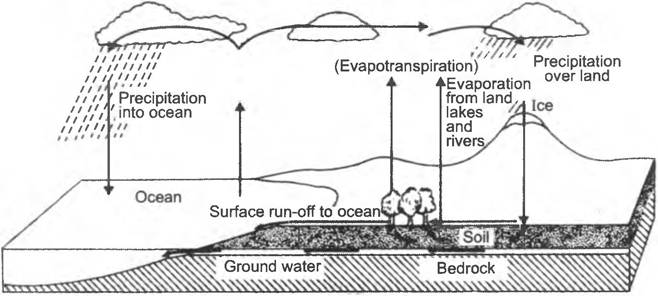
Fig. 2.4 : Water (or hydrological) cycle
An alternative pathway for hydrological cycle involves soil water or the underground water which is circulated by plants, animals and the atmosphere. The soil water is taken by the plants through their root system. A part of the water is utilised by the plants for photosynthesis and the excess of water is given off into the atmosphere during transpiration (It is the loss of water from the leaves of the plants via evaporation). In fact, transpiration is the major source of water into the atmosphere. The decay of dead plants by microorganisms releases water back into the soil. Animals consume water by drinking from various sources and also through the plants they eat. Water vapour is released into the atmosphere by breathing and evaporation from the surface of animals (sweating) and excretion. Whatever the route is followed, the water vapour being lighter rises in the air, where it gets cool and condenses into tiny droplets to form a cloud. The water from the clouds ultimately falls on the earth in the form of rain, part of which gets absorbed by the soil and the remaining finds its way into water bodies.
Water is also used in considerable amounts by various industrial units engaged in manufacturing processes and power generation units. This water after use is finally discharged into the water bodies, though the discharged water is harmful and is responsible for pollution of the water bodies.
2.8.1.2 Carbon Cycle
Carbon is one of the most important constituents of all organic compounds. It is, in fact, the building block of life. It is present in carbohydrates, fats, proteins and nucleic acids. The main reservoirs of carbon are as follows:
(i) Atmosphere in which carbon is present as carbon dioxide.
(ii) Oceans in which carbon is present as carbon dioxide dissolved in water and also as calcium carbonate in various seashells and in rocks at the bottom of sea.
(iii) Land on which it is present in some ores like dolomite and other carbonates.
The carbon cycle involves circulation of carbon dioxide from the three sources as shown below in Fig. 2.5.
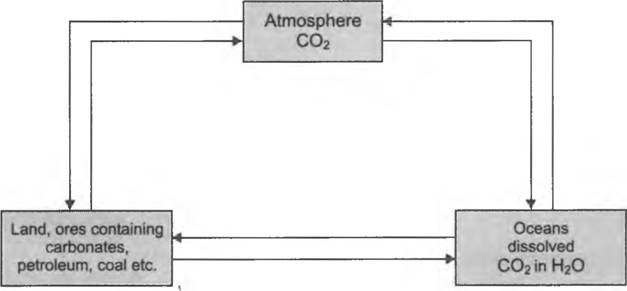
Fig. 2.5 : Reservoirs of carbon
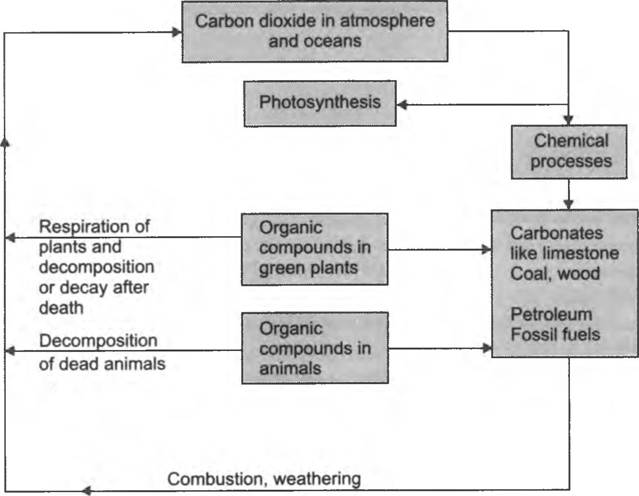
The various processes involved in carbon (or the so called carbon dioxide) cycle are given below:
(i) Carbon dioxide from the atmosphere enters the plants through photosynthesis where carbohydrates are produced.
(ii) From green plants, the carbon in the form of carbohydrates etc. enters into the bodies of animals.
(iii) The remains of dead animals and plants on putrefaction and decomposition by bacteria release carbon dioxide back to the atmosphere.
(iv) The atmospheric carbon dioxide gets dissolved in oceans etc. by simple diffusion process. Marine algae and photosynthetic bacteria obtain carbon dioxide from water. Some of the dissolved carbon dioxide is also trapped to form lime stone (calcium carbonate) and other carbonate containing rocks.
(v) Carbon dioxide returns to the atmosphere by respiration, combustion of fuels like coal, wood, diesel, natural gas, gasoline etc.
(vi) Weathering of carbonate containing rocks (particularly by water containing dissolved carbon dioxide as carbonic acid and by acid rain) releases carbon dioxide into the atmosphere. Volcanic eruptions are also responsible for the discharge of carbon dioxide to the atmosphere.
A word of caution - Release of excessive amounts of carbon dioxide into the atmosphere is responsible for green house effect and global warming (see Chapter 4).
The basic features of carbon cycle are depicted below in Fig. 2.6 (a) and 2.6 (b).
of rock, volcanic activity
Fig.
2.6 (a): Carbon Cycle (Flow sheet)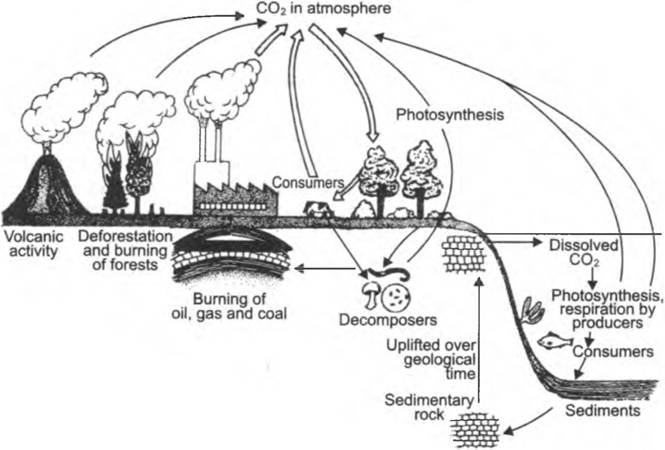
Fig. 2.6 (b): Carbon Cycle - various Features.
2.8.1.3 Nitrogen Cycle
Nitrogen is essential for the synthesis of amino acids and proteins in the animals and plants. Proteins are the building blocks of all living tissues. Nitrogen is present to the extent of 78-80% in the atmosphere. Atmosphere is the main source of nitrogen. However, the elemental nitrogen cannot be used by most of the living organisms. Plants can take up nitrogen either as nitrates or ammonia in the form of salts. This is achieved by the fixation of atmospheric nitrogen which in turn, is achieved either by a natural process or a synthetic process.
In the natural process of the fixation of atmospheric nitrogen, during periodic thunderstorms and lightening, the gaseous nitrogen is converted into nitric oxide, which gets oxidised into nitrogen dioxide. Both the oxides of nitrogen are washed down in rain and reach the soil, where the nitric acid formed combines with salts in the soil (e.g. sodium, calcium etc) to form the corresponding nitrates. During thunderstorms, atmospheric nitrogen may also combine with hydrogen in the atmosphere to produce ammonia, which is also washed down to the earth with rain and may combine with nitrates and sulphates in the soil to form ammonium salts. An alternate natural route for fixation of atmospheric nitrogen is with the help of certain microorganisms which can convert atmospheric nitrogen into ammonium ions. These microorganisms include nitrifying bacteria (e.g. aerobic Azotobacter and anaerobic Clostridium) and symbiotic nitrifying bacteria living in association with leguminous plants and symbiotic bacteria living in non-leguminous root nodule plants (e.g. Rhizobium) as well as blue-green algae (e.g. Anabaena, Spirulina). Some plants can take up directly ammonium ions as a source of nitrogen. Alternatively, ammonium ions can be oxidized to nitrites or nitrates by the specialized bacteria.
For example, Nitrosomonas bacteria can promote oxidation of ammonia into nitrite, which is further oxidized into nitrate by the bacteria Nitrobacter. The nitrates, thus obtained in the soil are taken up by plants and converted into amino acids-the building blocks of proteins. The remains of plants decay and during the process, nitrogen is returned to the soil in the form of ammonia. Some of the nitrates (being soluble in water) find their way into the water bodies like rivers, oceans etc. The denitrifying bacteria, e.g. Pseudomonas is present in soil as well as oceans; these convert the nitrates into elemental nitrogen, which escapes into the atmosphere, thus completing the cycle.In the synthestic process, fixation of atmospheric nitrogen is also achieved by industrial process. For example, in the Haber’s process, nitrogen and hydrogen are made to react together in the ratio 1:3 at high temperature and pressure in presence of a catalyst. The ammonia thus obtained is subsequently converted into fertilizers like ammonium nitrate and urea; these fertilizers in the soil are converted by bacteria into nitrites and nitrates. Nitrogen and oxygen of the atmosphere can also be made to combine at high temperature in presence of a catalyst to give nitric oxide which further combines with oxygen to give nitrogen dioxide. The dissolution of nitrogen dioxide into water gives nitric acid. This is the basis of Oswald’s process for the manufacture of nitric acid. The nitric acid, thus, obtained is converted into nitrates, which are used as fertilizers.
The flow sheet for fixation of atmospheric nitrogen is given below in Fig. 2.7 (a).
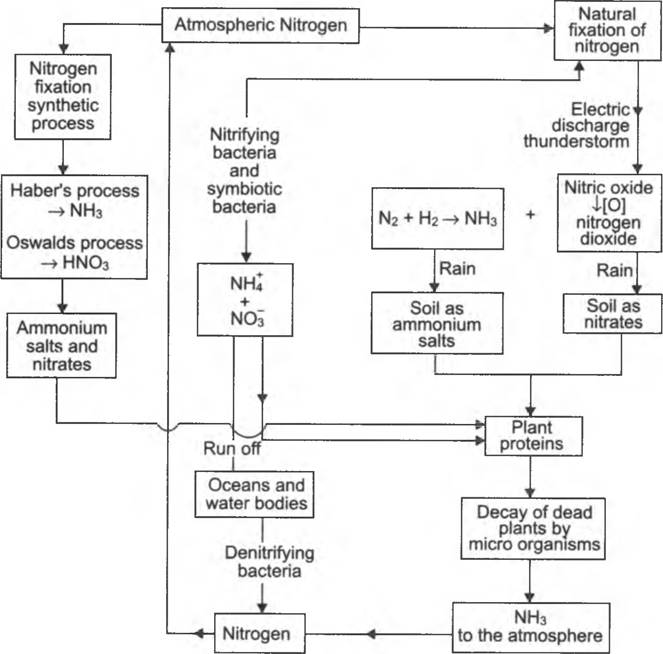
Fig. 2.7 (a): Flow Sheet for Nitrogen Fixation
Various features of nitrogen cycle are shown in Fig. 2.7 (b).
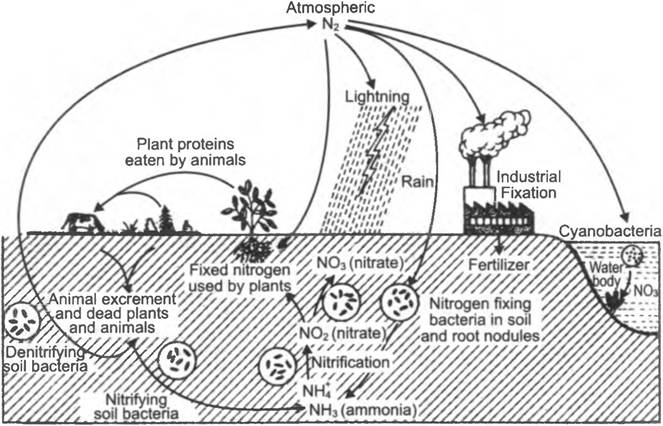
Fig. 2.7(b): Various features of Nitrogen cycle
There may be imbalance in nitrogen cycle due to following reasons:
(i) Soil erosion results in loss of nitrifying bacteria (present in top layer of the soil), which are essential component of nitrogen cycle.
(ii) The nitrogen compounds in the form of fertilizers may be washed away from the soil and may not be available for plants.
2.8.1.4 Oxygen Cycle
Oxygen is the second most abundant element in the atmosphere. It is present to the extent of about 21 percent and is essential for life processes. The main pools for oxygen are the atmosphere and oceans. The dissolved oxygen in water bodies is responsible for sustaining aquatic plants and animals. It is also a constituent of carbonate and oxide ores. The different steps in oxygen cycle are as follows:
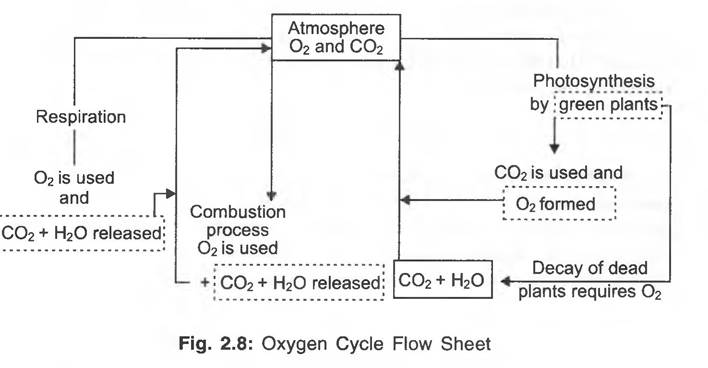
(i) During respiration, organisms including animals and humans consume oxygen from the air and release carbon dioxide into the atmosphere.
(ii) Carbon dioxide is utilised by green plants for photosynthesis, in which carbon dioxide reacts with water in the presence of solar energy and a catalyst (chlorophyll) to produce carbohydrates and the oxygen formed is released into the atmosphere.

(iii) Oxygen is needed by bacteria and fungi during decomposition; the products of decomposition (CO, and H2O) are released into the atmosphere. Oxygen is also needed for the burning of fossil fuels like wood, coal, petroleum etc; the products of combustion (CO2 and H2O) are released into atmosphere. The released CO2 and H2O are utilized during photosynthesis by the green plants.
(iv) In the upper atmosphere, solar energy splits H2O to give H2 and O2, which are released in the atmosphere.

These processes complete the oxygen cycle in nature. The oxygen content in the atmosphere remains more or less constant. The flow chart for oxygen cycle is represented as shown below in Fig. 2.8.
There may be imbalance in the oxygen cycle by deforestation which reduces the extent of photosynthesis (which is a major source of oxygen in the atmosphere) and hence the amount of oxygen in the atmosphere is reduced. However, this loss is compensated by sulphate reducing bacteria occurring in anaerobic environment; these bacteria use the sulphate ions as an oxygen source for oxidising organic matter.

The above reaction gives CO2 which is released into the atmosphere and utilized in photosynthesis leading to the release of oxygen.
2.8.2 Sedimentary Cycles
2.8.2.1 Sulphur Cycle
The sulphur cycle is basically sedimentary except for a comparatively smaller gaseous phase. The main source of sulphur is the lithosphere, where it is present as free sulphur and as sulphide ores of different elements like iron, copper, lead, tin, mercury, zinc etc. Sulphur is also present in coal and oil in the sedimentary rocks. Sulphur is a constituent of two of the twenty essential amino acids and is incorporated in several proteins and living organisms. It is released from the sedimentary rocks by weathering and decomposition by bacteria and fungi of organic matter. In the gaseous phase, sulphur is present as hydrogen sulphide and sulphur dioxide. Sulphur (as SO2) enters the atmosphere from several routes like volcanic eruptions, combustion of fossil fuels and from various metallurgical operations. Hydrogen sulphide enters the atmosphere by the putrefaction of organic matter by bacteria and fungi.
In the atmosphere, SO2 is oxidised to SO3 which comes to the land in the form of dilute solution of H2SO4 (acid rain). Hydrogen sulphide in the atmosphere is oxidised to sulphur dioxide by ozone; the reaction is catalysed by particulates present in the atmosphere.

In anaerobic soils and sediments, hydrogen sulphide is formed by sulphate reducing bacteria like Desulfavibrio. Certain species of Beggiatoa oxidise hydrogen sulphide to elemental sulphur. Even green and purple sulphur photosynthetic bacteria oxidise hydrogen sulphide to elemental sulphur. The flow sheet of sulphur cycle is represented below (Fig 2.9).
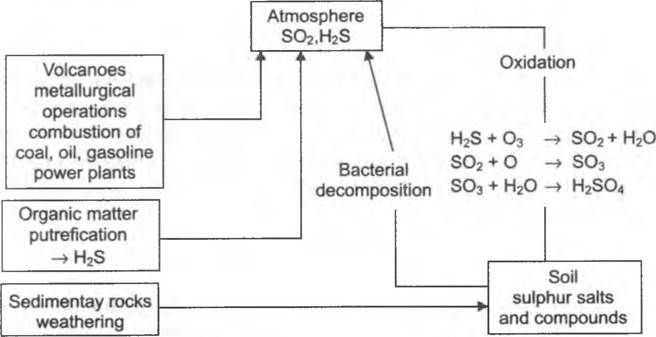
Fig. 2.9: Sulphur Cycle (Flow sheet)
2.8.2.2 Phosphorus Cycle
The content of phosphorous in living matter is very small, but it plays a vital and indispensable role. It is one of the most important element required by plants for their growth and development. It is a constituent of nucleic acids, phospholipids, ATP and ADP. In addition, significant quantities of phosphorus are present in the bones and teeth. The main reservoirs of phosphorous are rocks and other deposits. From these, phosphorous becomes available to the living organisms via a slow process of weathering of the rocks or by mining. Phosphorous is absorbed by the plants (through their root system) in its oxidized form, as phosphate, where phosphorous gets incorporated into different phosphorus containing compounds. From plants, the phosphorus finds its way to other living organisms. The decay of the dead organisms and plants releases the phosphorus content to the soil, which is again recycled. Some phosphorus finds its way to the oceans through the rivers. In oceans, phosphorous is consumed by fish and sea birds; any excess phosphorous gets deposited into the sediments.
Presence of excess of phosphorus causes environmental problems. This happens when too much of phosphate fertilizer is sprayed on the land. Excess of phosphorous is drained by rain into the water bodies.
A major problem associated with the presence of excess of phosphate fertilizers (and also other fertilizers) is eutrophication of lakes. The increase in the chemical elements or nutrients (by flowing of the excess fertilizers) in the water bodies is called eutrophication. These nutrients (particularly phosphorus) cause population explosion of photosynthetic bacteria and blue-green algae. With the passage of time, the whole of the lake or the pond is covered by a thick layer of algae resulting in the reduced availability of oxygen. This results in the death of algae, bacteria and fish.
2.8.2.3 Sodium Cycle
Sodium is an important micronutrient, though it is the sixth most abundant element in the lithosphere. It occurs as rock salt (sodium chloride), Chile saltpetre (sodium nitrate), sodium Sesquicarbonate (Na2CO3.NaHCO3.2H2O) and cryolite (Na3AlF6). Oceans are a great source of sodium chloride, where it comes as run off from the mountainous areas. Sodium ions are absorbed by the roots of plants and utilised for various activities. Salts of sodium and potassium maintain the ionic and water balance of the body. Sodium chloride in moderate amounts is necessary for the healthy heart conditions. However, excess sodium is a curse and it leads to a variety of ailments. Sodium cycle includes isolation of salt from the oceans, its use by the plants and animals and its return back to the land or oceans by decay of dead plants and animals.
2.8.2.4 Potassium Cycle
Potassium (like sodium) is also a micronutrient and is vital to all living organisms. It is found in nature in the form of its salts like carnallite (KC1. MgCl2.6H2O), polyhalite (K2SO4.MgSO4.CaSO4.2H2O), kainite (KC1. MgSO4.3H2O), schonite (K2SO4.MgSO4.6H2O), Salt petre (KNO3) and Iangbenite (K2SO4.2MgSO4). Potassium is commonly used as a fertilizer and is absorbed by the plants through root system. In plants, potassium is needed for various functions and is released after their death and decay.
2.8.2.5 Magnesium Cycle
Magnesium is also a micronutrient and is essential for plant and animal life. It is an essential constituent of chlorophyll, the green colouring matter of plants. Magnesium regulates the functioning of muscles and nerves in human beings who obtain it from leafy green vegetables and cereals. It is found in lithosphere in the form of its salts like magnesite (MgCO3), dolomite (MgCO3-CaCO3), carnallite (KCl.MgCl2.6H2O), asbestos [CaMg(SiO3)4]. Halides of magnesium are found in seawater. In sea, magnesium is obtained by run off processes from rocks and sand. It is absorbed by the plants via their root system and performs various functions. After the decay of the plants, it is returned back to the soil.
2.8.2.6 Iron Cycle
Iron is essential for life since it is a constituent of haemoglobin in human blood. It is also needed for a number of cellular processes. Iron is one of the most common metals in the earth’s crust and occurs in soil and granite rocks. It is also found in nature in the form of its salts eg, magnetite (Fe3O4), haematite (Fe2CO3), limonite (Fe2O3.3H2O), siderite (FeCO3) and iron pyrites (FeS2). Plants absorb dissolved iron through their root system. Animals get iron through plants. After the death of animals and plants, it is released back to the soil and water.
More on the topic Various Cycles of Environment:
- Some species exhibit population cycles
- Parasites can influence host population cycles
- Life cycles are often complex
- Complex cycles may result from stagespecific selection pressures
- Geochemical cycles in the Biosphere
- Predator-prey cycles can be modeled mathematically
- Predator-prey cycles can persist in the field
- Historical Cycles of the Twentieth Century and the Issue of Violence
- THE RITUAL CYCLES
- Nutrient Cycles and Losses
- Global Biogeochemical Cycles
- Predator-Prey Population Cycles
- Snowshoe Hare Cycles: A Case Study
- Carbon cycles dynamically at the global scale
- CONCEPT 22.4 Freshwater and marine nutrient cycles occur in a moving medium and are linked to terrestrial ecosystems.
- Types of Environment
- Management of Environment
- Segments of Environment
- EQUIPMENT AND ENVIRONMENT
- Chinese Religions and the Environment