Eimeria spp. Infection: Intestinal Coccidiosis
Mice are host to 18 species of Eimeria, of which Eimeria falciformis, Eimeria vermiformis, Eimeria papillata, and Eimeria ferrisi are the most significant as pathogens. Intestinal coccidiosis rarely occurs in well-managed
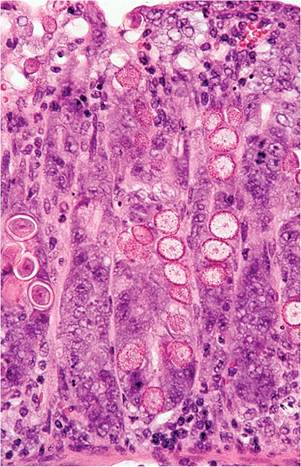
FIG. 1.87. Colon from a young wild mouse with intestinal coccidiosis. There are multiple developmental stages of the parasite with associated hyperplastic and inflammatory change.
facilities. Intestinal coccidiosis is very common among pet and wild mice, where it causes marked typhlocolitis (Fig. 1.87) and runting in juvenile animals. Oocysts can be found in the mucosa of older mice without discernible lesions.
More medical literature on Medic.Studio
More on the topic Eimeria spp. Infection: Intestinal Coccidiosis:
- Helicobacter spp. Infection
- Malassezia spp. Infection: Malasseziasis
- Bacterial Enteric Infections Brachyspira spp. Infection
- Aspergillus spp. Infection: Aspergillosis
- Actinobacillus spp. Infection
- Actinomyces spp. Infection
- Leptospira spp. Infection
- Brucella spp. Infection: Brucellosis
- Klebsiella spp. Infection
- Chlamydophlla spp. Infection
-
Infectious diseases -
Internal diseases -
Obstetrics and Gynaecology -
Pediatrics -
Veterinary medicine -
-
Conflictology -
Ecology -
Economy -
Finance -
History -
Law -
Medicine -
Philosophy -
Religious studies -