Streptococcus and Enterococcus Infections
Streptococci are commensal and pathogenic bacteria that colonize the nose, mouth, intestine, genital tract, and skin. Pathogenic streptococci produce beta hemolysin and polysaccharide surface antigens that can be differentiated serologically into Lancefield groups.
Pathogenic streptococci in mice belong to Lancefield groups A, B, C, and G. Genetic analysis has resulted in reclassification of Lancefield group D streptococci into the genus Enterococcus. Like staphylococci, pathogenic streptococci elaborate an array of extracellular proteins that facilitate adherence, invasion, and tissue destruction for the release of nutrients. Among these products are pyogenic and superantigen exotoxins. In addition, bacteremic disease can occur in immunodeficient or irradiated mice infected with alpha hemolytic Streptococcus or Enterococcus spp. that would otherwise be considered nonpathogenic.Systemic streptococcal infections can occur as a cause of sporadic disease or outbreaks of disease in both immunocompetent and immunocompromised mice. Group A Streptococcus has been isolated from bacteremic Swiss mice that were inoculated with sterile endotoxin. The mice were found to carry Streptococcus in their pharyn- ges, and affected animals had cervical lymphadenitis, with bacteria isolated from multiple organs. Group B Streptococcus has been associated with meningoencephalitis, ependymitis, and periventriculitis in nude mice. Infection of the brain was presumed to arise by extension from the nose, where bacteria were isolated from subclinical carriers. Group B S. agalactiae has been associated with an epizootic in a barrier colony of DBA/2 mice, which had ascending pyelonephritis with subsequent bacteremia resulting in suppurative lesions in a variety of organs, including heart, kidneys, spleen, and liver, and less commonly in uterus, thorax, lymph nodes, and lungs.
DBA/2 and B6D2F1 or D2B6F1 hybrid mice were susceptible, whereas C3H, NOD, and B6 mice in the same colony were not infected. Experimental inoculation of DBA and Swiss mice confirmed the unique susceptibility of DBA/2 mice. Group C Streptococcus equisimilis (S. dysgalactiae subsp. equisimilis) has been associated with subcutaneous, hepatic, and abdominal abscesses in ICR Swiss mice. The bacteria also colonized the nasopharynx and intestine. An outbreak of an untyped beta-hemolytic Streptococcus involved conventional C3H3 mice. The mice were bacteremic, with colonies of bacteria associated with endocarditis, mural thrombi, gastric mucosal necrosis, and renal cortical necrosis. Alpha hemolytic Enterococcus durans, in concert with P. aeruginosa, has been shown to cause bacteremic disease in SCID mice, and was most commonly problematic in pregnant and lactating animals. Bacteria were isolated from various organs and middle ear. The mice developed focal pericarditis and thickened hepatic capsules, with multifocal nonsuppurative hepatitis.Systemic disease due to alpha hemolytic S. viridans has been noted in irradiated SCID and SCID-beige mice. Mice were severely ill, with splenomegaly and pulmonary congestion. Massive numbers of Gram-positive bacteria were present in vessel lumina, with virtually no host response, particularly in glomerular capillaries (Fig. 1.80). A similar syndrome has been seen by the authors in irradiated SCID mice infected with E. faecalis.
An alternative form of streptococcal disease in mice is ulcerative dermatitis, which resembles the syndrome associated with Staphylococcus. Group G Streptococcus has been incriminated in an epizootic of necrotizing dermatitis. Ulcerative lesions were present on the dorsal
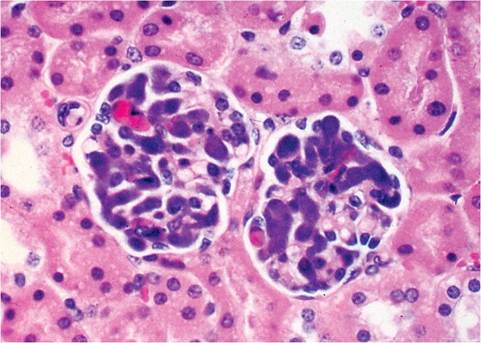
FIG. 1.80. Kidney from an irradiated SCID/beige mouse with disseminated alpha-hemolytic streptococcal infection. Numerous bacterial colonies are present in glomerular vessels.
thoracic or lumbar regions, with progressive spread to the shoulder and pelvic regions. Underlying tissue had vasculitis and thrombosis, with bacterial invasion of subcutaneous tissue. The bacterium was isolated from the oropharynx and spleens of many of the mice.
More on the topic Streptococcus and Enterococcus Infections:
- STREPTOCOCCUS INFECTIONS
- Enterococcus spp. Infection: Enterococcal Enteropathy
- Streptococcus pneumoniae Infection: Pneumococcal or Diplococcal Infection
- Bloodstream Infections and Catheter-Related Bloodstream Infections
- Other Bacterial Infections Corynebacterium spp. Infections
- Central Nervous System Infections Meningitis
- Skin, Soft-Tissue, and Bone Infections Purulent Skin and Soft-Tissue Infections (Furuncles, Carbuncles, Abscesses)
- OPPORTUNISTIC INFECTIONS
- INTRAUTERINE INFECTIONS
- PERINATAL INFECTIONS
- NOSOCOMIAL INFECTIONS
- INTRACRANIAL INFECTIONS
- ENTERQViRAL INFECTIONS (NON-POLIO)
- Genitourinary Infections
- HERPETIC VIRAL INFECTIONS
- FUNGAL INFECTIONS
- Viral infections
- PNEUMOCOCCAL INFECTIONS